
被称为“第四次工业革命”的数字化浪潮已席卷全球。数字化为我们展现了无限未来,一批全新技术和工具的出现为整个价值链带来了巨大的机遇。基于高效研发的创新是巴斯夫重要的增长引擎。我们的跨学科团队不断开发创新工艺和产品,追求可持续发展的未来。当研发遇上数字化,会发生哪些新的化学作用?
在2017年6月29日于德国路德维希港举行的研究新闻发布会上,巴斯夫分享了对化学研发数字化及相关工具和应用的洞察。

“通过加大数字化技术在研发中的运用,巴斯夫巩固了其化工行业最具创新能力企业的地位。”
一、超级计算机,让复杂建模不再复杂
在新闻发布会上,各应用领域专家探讨了研发数字化在实践中的应用。其中一大关键要素便是将于今夏在路德维希港投入使用的全新超级计算机——“Quriosity”(这个由巴斯夫全球员工票选出的名字和英文单词“好奇心”[curiosity]同音,但是更Q)。
“Quriosity”每秒可运算1.75千万亿次,是巴斯夫现有科学计算能力的10倍。在上个月刚刚新公布的全球超级计算机排00强榜单中,“Quriosity”位居第65位。
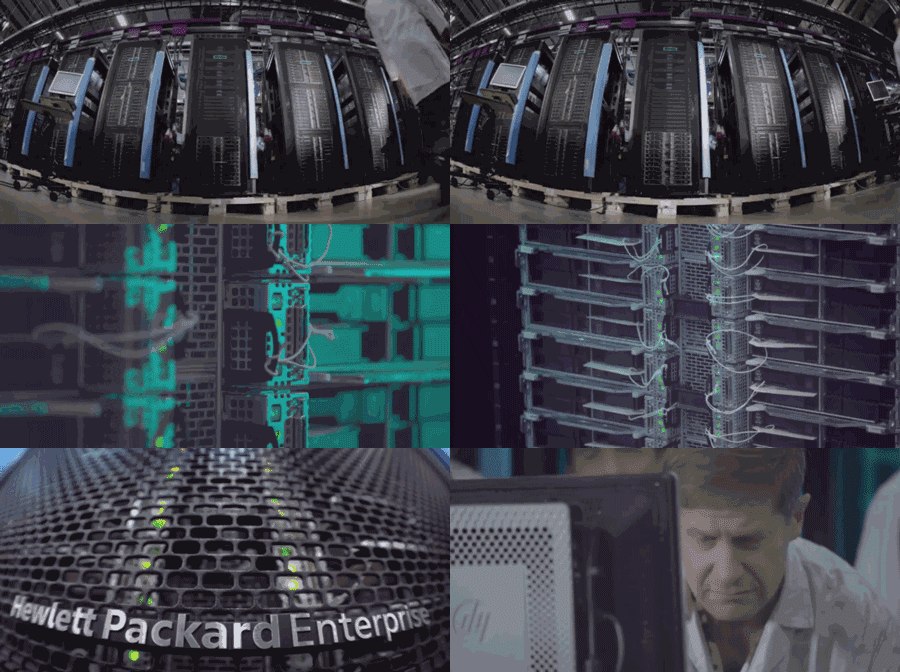
据薄睦乐介绍,这款新开发的超级计算机将帮助巴斯夫专家更高效地研究复杂问题,从而进一步缩短新产品上市时间。“这样我们就能够更好地满足客户对定制化学创新解决方案的需求。”
二、实验也要现实与虚拟结合进行
借助于巴斯夫的数字化方法,虚拟建模和计算机模拟与实验室实验可同步进行,相辅相成。模拟有助于实验的设计和预测,而实验能提供可测量的结果并评估计算机模型。最终帮助研究人员更好地了解化学产品和工艺,从而在更短的时间内实现更大的创新。
化学家初方方博士和分子模拟专家Eduard Schreiner博士在讨论应用计算机模拟研究微胶囊技术。该技术用于保护活性成分免受湿气和氧气等的干扰。模拟有助于更好地理解和预测微胶囊中复杂的化学和物理作用,从而更加精确地规划实验室测试。
此外,数字化还为研究人员落实创意并在全球范围内紧密合作创造了新的契机。巴斯夫专家认为,数字化技术必须直接整合到研发部门的日常工作中。直接访问知识系统对高效解决问题十分必要,同时也有助于研究人员开阔视野。例如,基于云技术的应用平台将大大提高所有研究人员扩大知识网络的效率。
最近几个月,巴斯夫研究人员的多个成功项目表明,数字化在研究领域拥有巨大潜力:
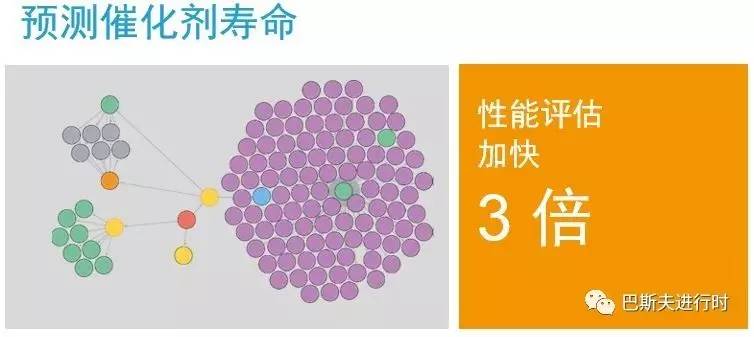
比如,研究人员首次对中间体产品环氧乙烷生产中的催化剂数据进行了系统性的研究。此项研究所发现的催化剂配方和催化性能之间的相关性可以帮助更准确、快速地预测催化剂的性能和使用寿命。
三、下个创新点可能会在“数据挖掘”中诞生
在设计活性成分的稳定配方时,数字化技术也在一新功能性聚合物的建模中发挥了关键作用。
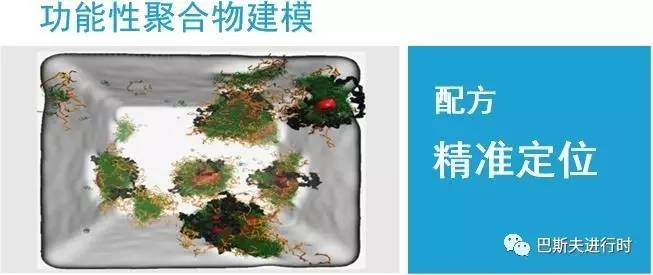
巴斯夫专家从上万种可能的方案中确定了适当的聚合物结构,进而合成了所需的配方聚合物,有可能大幅提高乳剂浓度。此类建模如今已成为配方开发的必经环节。
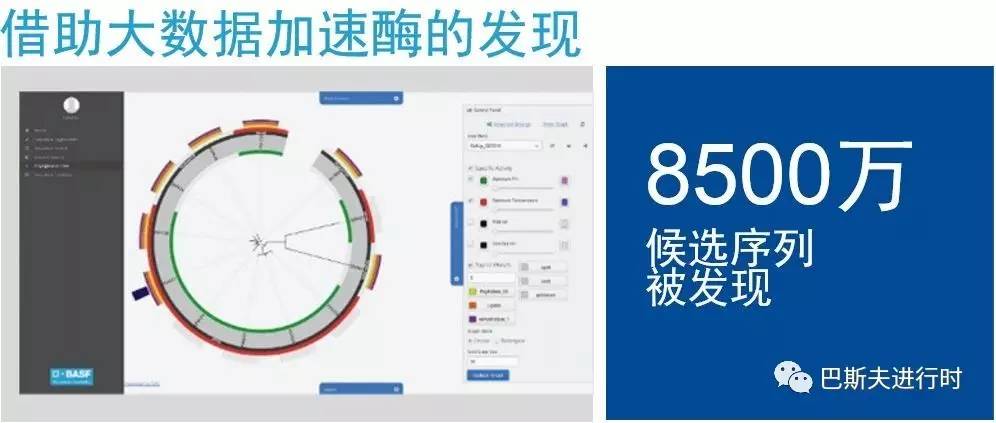
通过“数据挖掘”,研究人员可从现有的海量数据提取有用的知识。以生物科技产品或工艺开发为例,这可能加速识别有用的酶或发现合适的细菌。
四、农艺模式惠及农民
依靠内外合作,巴斯夫同样在农业的数字化转型中发挥了重要作用。在线应用程序Maglis® 可帮助农民更有效地利用现有信息,在农田种植方面做出更好的决策。今年5月底,巴斯夫收购了ZedX公司,后者专门研发天气、植物生长和疾病、杂草以及有害生物的农艺模型。巴斯夫和ZedX联合研发了一款基于天气和环境条件的模型,为巴斯夫除草剂确定正确的应用时机。
五、研发投入体现巴斯夫的坚定承诺
巴斯夫的目标是继续保持之前几年的高额研发投入。由于在植物生物技术领域的结构调整,2016年的研发支出为18.63亿欧元,略低于上一年的19.53亿欧元。截至 2016 年,巴斯夫研究项目总数约 3,000 个,研发员工约 10,000 人。巴斯夫与全球约600所高校、科研机构和企业在众多学科领域建立的合作网络依然是巴斯夫专知一体化的关键支柱。
翻译:
The digital wave known as the “fourth Industrial Revolution” has swept the world. Digitization offers us an infinite future, and the emergence of a whole new set of technologies and tools presents tremendous opportunities across the value chain. Innovation based on efficient research and development is an important growth engine for BASF. Our interdisciplinary team is constantly developing innovative processes and products in pursuit of a sustainable future. What new chemistry happens when R&D meets digitization?
At a research press conference in Ludwigshafen, Germany, on June 29, 2017, BASF shared insights into the digitization of chemical R&D and related tools and applications.
Basf Europe Vice Chairman of the Executive Board and Chief Technology Officer Dr. Bruderer
“By increasing the use of digital technologies in research and development, BASF has strengthened its position as the most innovative company in the chemical industry.”
First, supercomputers make complex modeling no longer complicated
At the press conference, experts in various application fields discussed the application of digitization in R&D in practice. One of the key elements is a new supercomputer, Quriosity, which will open in Ludwigshafen this summer. (The name, chosen by BASF employees around the world, sounds like “curiosity” but is more Q.)
Quriosity can perform 1.75 petaflops, 10 times more scientific computing power than BASF currently has. Quriosity was No. 65 on a new list of the world’s top 100 supercomputers released just last month.
According to BruderMuller, the newly developed supercomputer will help BASF experts study complex problems more efficiently, thereby further reducing the time to market for new products. “This way we are better able to meet our customers’ needs for customized chemical innovation solutions.”
Second, the experiment should also be carried out in combination with reality and virtual
With BASF’s digital approach, virtual modeling and computer simulation can be carried out synchronously with laboratory experiments and complement each other. Simulations aid in the design and prediction of experiments, which provide measurable results and evaluate computer models. Ultimately helping researchers better understand chemical products and processes, leading to greater innovation in less time.
Chemist Dr. Chu Fang and molecular simulation expert Dr. Eduard Schreiner discuss the application of computer simulation to study microcapsule technology. The technology is used to protect the active ingredient from interference such as moisture and oxygen. Simulations help to better understand and predict the complex chemical and physical interactions in microcapsules, leading to more precise planning of laboratory tests.
In addition, digitization has created new opportunities for researchers to implement ideas and collaborate closely on a global scale. Basf experts believe that digital technology must be directly integrated into the daily work of R&D departments. Direct access to knowledge systems is essential for efficient problem solving and helps researchers broaden their horizons. For example, cloud-based application platforms will greatly increase the efficiency of all researchers in expanding their knowledge networks.
In recent months, a number of successful projects by BASF researchers have demonstrated the huge potential of digitisation in research:
For example, the researchers conducted the first systematic study of catalyst data used in the production of ethylene oxide, an intermediate product. The correlation between catalyst formulation and catalytic performance found in this study can help predict catalyst performance and service life more accurately and quickly.
Third, the next innovation may be in “data mining”
Digital technologies also play a key role in modeling new functional polymers when designing stable formulations of active ingredients.
From tens of thousands of possible solutions, BASF experts identified the appropriate polymer structure and then synthesized the required formulation polymer, which has the potential to significantly increase the emulsion concentration. Such modeling is now a necessary part of recipe development.
Through “data mining”, researchers can extract useful knowledge from vast amounts of existing data. In the case of biotech product or process development, this could speed up the identification of useful enzymes or the discovery of suitable bacteria.
Fourth, the agronomic model benefits farmers
Basf has also played an important role in the digital transformation of agriculture through internal and external cooperation. Maglis®, an online application, helps farmers use available information more effectively and make better decisions about planting their fields. In late May, BASF acquired ZedX, which specializes in agronomic models of weather, plant growth and disease, weeds, and pests. Basf and ZedX have teamed up to develop a model based on weather and environmental conditions to determine the right time to apply BASF herbicide.
R&d investment reflects BASF’s strong commitment
Basf aims to maintain the high R&D spending of previous years. R&d expenditure in 2016 was €1.863 billion, slightly lower than the previous year’s €1.953 billion, due to restructuring in the field of plant biotechnology. As of 2016, BASF has about 3,000 research projects and 10,000 R&D employees. The network of collaboration between BASF and some 600 universities, research institutions and companies across a wide range of disciplines remains a key pillar of the integration of BASF expertise.
本文来源于:巴斯夫。编辑:数字化转型网默然。

免责声明: 本网站(https://www.szhzxw.cn/)内容主要来自原创、合作媒体供稿和第三方投稿,凡在本网站出现的信息,均仅供参考。本网站将尽力确保所提供信息的准确性及可靠性,但不保证有关资料的准确性及可靠性,读者在使用前请进一步核实,并对任何自主决定的行为负责。本网站对有关资料所引致的错误、不确或遗漏,概不负任何法律责任。
本网站刊载的所有内容(包括但不仅限文字、图片、LOGO、音频、视频、软件、程序等) 版权归原作者所有。任何单位或个人认为本网站中的内容可能涉嫌侵犯其知识产权或存在不实内容时,请及时通知本站,予以删除。