随着大数据分析、云计算、人工智能、工业物联网等新技术的迅猛发展,智能化已经成为推动产业领域发展的新动能,也是公认的未来发展趋势。同时,“新基建”的背景下,智能化必将给各行各业带来颠覆性的变化。
从战略角度看,企业的智能化转型势在必行,智能化趋势也为众多企业,尤其是传统企业重塑全价值链、转型升级和创新发展带来前所未有的机遇。贝恩公司此前一项调研显示,通过采纳智能化工具,企业能够节省约35%的生产成本和高达75%的工作时间。数字化转型网szhzxw.cn
当然,智能化并不是简单地采用某一项或几项特定的前沿技术,而是要通过各类技术的赋能与解决方案的组合叠加效应,来共同提高企业生产力,实现曾经“不可能”完成的任务。因此,如何最大化地释放智能化的潜力,助力企业降本提效,是管理层需要思考的重要课题。
一、智能化的演变和趋势
智能化的演变经历了三个阶段,分别是脚本时代、云和机器人时代,以及智能自动化时代。
第一阶段:脚本时代(5-7年前)。通过应用程序替代重复性的人力劳动,释放大量人力,这是智能化初级阶段的显著特征。数字化转型网szhzxw.cn
第二阶段:基于云技术和机器人的时代(过去3-5年)。伴随新技术不断涌现,基于云的工作流程成为新的实践。此时,智能化不再局限于数据、文本和脚本,而开始以机器人取代人工。
第三阶段:智能自动化阶段(未来3-5年)。这个阶段最显著的特征是技术不仅能够替代人工,还可以实现创新,全方位优化企业流程和职能。例如,无人驾驶运输系统、智能化仓储物流、聊天机器人等智能工具将日益普及。未来,机器或将具备自主学习和自主决策的能力,“效益最大化,人工最小化”是大势所趋。
二、智能化的机遇与挑战
短期来看,新冠疫情作为一剂“催化剂”,让政府和企业进一步认识云服务、大数据、AI等数字化技术和服务的价值,加速推动了一批与智能化相关的应用场景落地。数字化转型网szhzxw.cn
今年4月,贝恩针对IT采购者的一项调研也表明,新冠疫情促进了各个行业全价值链的智能化:超过一半受访企业表示,在疫情影响下,正在计划加速推进智能自动化发展。从行业来看,金融机构和高科技公司的意愿最强,分别有90%和80%的受访企业表示愿意在智能自动化改革方面进行长期、持续的投入。此外,为了满足不断增长的消费者需求,医疗、消费品和零售行业亦积极布局,在日常运营和管理中纳入智能自动化工具,以应对疫后“新常态”。数字化转型网szhzxw.cn

长期来看,伴随数据的持续增长和先进技术的日益成熟,智能化将在效率提升和商业模式创新两大方面为企业带来巨大机遇。
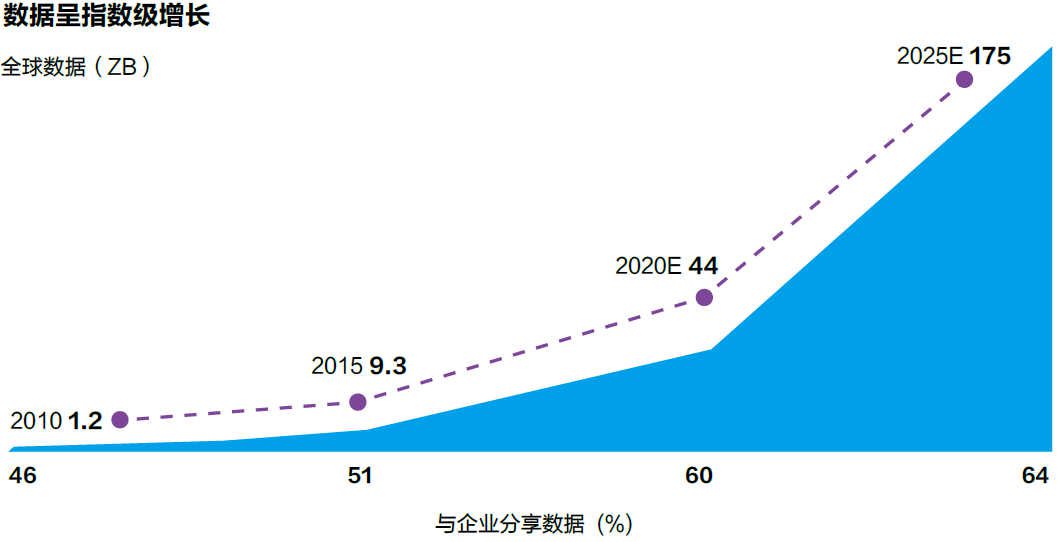
贝恩研究显示,过去十年,全球数据量呈现指数级增长,从1.2ZB增长到44ZB。未来5年,全球数据将继续保持高速增长,预计将从44ZB增长到175ZB。数字化转型网szhzxw.cn
不过,海量的数据只是基础,大数据的最终目的是价值化。作为智能时代的驱动引擎,企业应当深度挖掘“数据石油”,在注重培养数据采集能力的同时,提升数据分析能力和应用能力,致胜“新常态”下的智能化商业时代。数字化转型网szhzxw.cn
领先企业已率先试水,例如某跨国饮料企业基于大数据和人工智能,将传统单一分割的不同系统延伸至全球业务端,开发出采购共享系统、HR共享系统、供应商共享系统等,打破以往的数据孤岛现象,在优化所有相关者体验的同时,提升了端到端能力。又如某大型连锁超市企业深耕智能自动化领域,借力RPA(机器人流程自动化)技术,增强交付流程效率,完善供应链管理能力。
与此同时,智能化也是一把双刃剑,必然给部分传统行业和旧的商业模式带来冲击,加剧市场变局。随着越来越多的企业主动拥抱“智变”时代,部分重复性高、复杂度较低且劳动密集型岗位也将逐渐不复存在。根据贝恩《展望2030:全球劳动力市场报告》预计,到2020年代末,通过业务流程自动化或将使当前职位减少20%至25%。数字化转型网szhzxw.cn
因此,要建设真正的智能化,仍需要克服许多挑战。如何合理规划智能化转型路径,平稳地从试点阶段过渡到推广阶段,是每一家企业推动智能化转型都要面临的挑战。
三、打造智能化战略分三步走
企业须立即着手布局智能化,围绕以下三个方面进行改革,打造智能化战略。
1. 大胆制定、识别并拆分目标
企业的智能化改革目标须与整体战略一致,立足行业特征,明确痛点,有的放矢。例如,通信行业企业应优先布局与网络相关的智能化应用场景,医疗行业企业则要重点发力建立电子健康数据收集系统。同时,智能化转型并非朝夕之功,领导者不妨在实践中细化目标,设立短期和中长期目标,逐一实施。
2. 良好的治理和管理能力
企业管理者应把智能化改革纳入公司内部治理流程,并补充完善管理方式:如广纳贤才,建立精通智能化的人才智库;根据新的智能工具定义新的工作方式;推出员工激励机制,奖励圆满完成考核指标的员工,并邀请其分享经验,树立榜样。数字化转型网szhzxw.cn
3. 卓越的交付能力
以价值为导向,通过制定一体化控制框架、持续的追踪反馈、与合作伙伴的紧密沟通,不断优化企业自身的智能化水平。
骐骥千里非一日之功,推动真正的智能化转型需要业务、技术及组织三个方面的转型相互配合,缺一不可。角力“智”造新时代,企业的智能化之路任重道远。
翻译:
With the rapid development of new technologies such as big data analysis, cloud computing, artificial intelligence, and industrial Internet of Things, intelligence has become a new driving force to promote the development of industrial fields and is also a recognized future development trend. At the same time, under the background of “new infrastructure”, intelligence will certainly bring subversive changes to all walks of life.数字化转型网szhzxw.cn
From a strategic point of view, the intelligent transformation of enterprises is imperative, and the intelligent trend has also brought unprecedented opportunities for many enterprises, especially traditional enterprises, to reshape the whole value chain, transformation and upgrading, and innovation and development. According to a previous study by Bain & Company, companies can save about 35% in production costs and up to 75% in work time by adopting smart tools.
Of course, intelligence is not simply the use of one or several specific cutting-edge technologies, but through the combination of various technologies and solutions, to jointly improve enterprise productivity and achieve once “impossible” tasks. Therefore, how to maximize the potential of intelligence to help enterprises reduce costs and improve efficiency is an important topic that management needs to think about.数字化转型网szhzxw.cn
First, the evolution and trend of intelligence
The evolution of intelligence has gone through three stages, namely the era of scripting. The era of cloud and robotics, and the era of intelligent automation.
Stage 1: The Script Era (5-7 years ago). The replacement of repetitive human labor through applications and the release of a large number of human resources is a significant feature of the initial stage of intelligence.
Phase 2: The era of cloud-based technology and robotics (last 3-5 years). As new technologies continue to emerge, cloud-based workflows are the new practice. At this point, intelligence is no longer limited to data, text and scripts. And begins to replace human labor with robots.数字化转型网szhzxw.cn
The third stage: intelligent automation stage (next 3-5 years). The most significant feature of this stage is that technology can not only replace human labor. But also enable innovation and optimize enterprise processes and functions in all aspects. For example, intelligent tools such as driverless transportation systems, intelligent warehousing and logistics, and chatbots will become increasingly popular. In the future, machines may have the ability to learn and make decisions independently. And “maximizing benefits and minimizing labor” is the general trend.数字化转型网szhzxw.cn
Second, the opportunities and challenges of intelligence
In the short term, the novel coronavirus epidemic, as a “catalyst”, allows the government and enterprises to further understand the value of cloud services, big data, AI and other digital technologies and services, and accelerates the implementation of a number of intelligence-related application scenarios.
A Bain survey of IT buyers in April also showed that the pandemic has boosted intelligence across the value chain across industries: more than half of the companies surveyed said they were planning to accelerate smart automation in the wake of the pandemic. By industry, financial institutions and high-tech companies are the most willing, with 90 percent and 80 percent of respondents, respectively, expressing a willingness to make long-term, sustained investments in smart automation reforms. In addition, in order to meet growing consumer demand, the healthcare, consumer goods and retail industries are also actively deploying smart automation tools in their daily operations and management to cope with the post-pandemic “new normal.”数字化转型网szhzxw.cn
In the long term, with the continuous growth of data and the increasing maturity of advanced technologies, intelligence will bring huge opportunities for enterprises in two aspects: efficiency improvement and business model innovation.
According to Bain research, global data volume has grown exponentially over the past decade, from 1.2 zettabytes to 44 zettabytes. In the next five years, global data will continue to grow at a high rate and is expected to grow from 44ZB to 175ZB.数字化转型网szhzxw.cn
However, massive data is only the foundation, the ultimate purpose of big data is value.
As the driving engine of the intelligent era, enterprises should deeply explore the “data oil”, pay attention to the training of data collection capabilities. While improving data analysis capabilities and application capabilities, and win the intelligent business era under the “new normal”.
Leading companies have taken the lead in testing the waters. Such as a multinational beverage company based on big data and artificial intelligence, extending the traditional single split of different systems to the global business side, developing a procurement sharing system, HR sharing system, supplier sharing system, etc., to break the previous data island phenomenon. While optimizing the experience of all stakeholders, improve the end-to-end capability. Another example is a large supermarket chain enterprise that is deeply engaged in the field of intelligent automation, leveraging RPA (robotic process automation) technology to enhance the efficiency of delivery processes and improve supply chain management capabilities.数字化转型网szhzxw.cn
At the same time, intelligence is also a double-edged sword, which will inevitably bring impact to some traditional industries and old business models, and exacerbate market changes.
As more and more enterprises take the initiative to embrace the era of “smart change”. Some highly repetitive, less complex and labor-intensive jobs will gradually cease to exist. According to Bain’s Outlook 2030: Global Labor Market Report. By the end of the 2020s, 20 to 25 percent of current jobs could be eliminated through business process automation.数字化转型网szhzxw.cn
Therefore, many challenges still need to be overcome to build true intelligence. How to reasonably plan the intelligent transformation path and smoothly transition from the pilot stage to the promotion stage is a challenge for every enterprise to promote intelligent transformation.
Third, to create an intelligent strategy in three steps
Enterprises must immediately begin to lay out intelligence, reform around the following three aspects, and create an intelligent strategy.数字化转型网szhzxw.cn
Be bold in setting, identifying, and breaking down your goals
The intelligent reform goal of the enterprise must be consistent with the overall strategy, based on the characteristics of the industry, clear pain points, and targeted. For example, enterprises in the communications industry should prioritize the layout of intelligent application scenarios related to the network. And enterprises in the medical industry should focus on the establishment of electronic health data collection systems. At the same time, intelligent transformation is not an overnight success, leaders may wish to refine goals in practice, set short and medium – and long-term goals, one by one implementation.数字化转型网szhzxw.cn
Good governance and management ability
Enterprise managers should incorporate the intelligent reform into the internal governance process of the company,. And supplement and improve the management mode: for example, recruit talents and establish a talent pool proficient in intelligence. Define new ways of working based on new intelligent tools; Launch an employee incentive mechanism to reward employees who successfully complete the assessment indicators. And invite them to share their experience and set an example.
Excellent delivery capability
Value-oriented, through the development of an integrated control framework, continuous tracking feedback. And close communication with partners, the enterprise’s own intelligence level is constantly optimized.数字化转型网szhzxw.cn
A steed can’t be accomplished in a day. To promote real intelligent transformation, the transformation of business, technology and organization needs to work together. Wrestle with “wisdom” to create a new era, the intelligent road of enterprises has a long way to go.
本文由数字化转型网(www.szhzxw.cn)转载而成,来源于广东省工业和信息化厅;编辑/翻译:数字化转型网宁檬树。

免责声明: 本网站(https://www.szhzxw.cn/)内容主要来自原创、合作媒体供稿和第三方投稿,凡在本网站出现的信息,均仅供参考。本网站将尽力确保所提供信息的准确性及可靠性,但不保证有关资料的准确性及可靠性,读者在使用前请进一步核实,并对任何自主决定的行为负责。本网站对有关资料所引致的错误、不确或遗漏,概不负任何法律责任。
本网站刊载的所有内容(包括但不仅限文字、图片、LOGO、音频、视频、软件、程序等) 版权归原作者所有。任何单位或个人认为本网站中的内容可能涉嫌侵犯其知识产权或存在不实内容时,请及时通知本站,予以删除。