导读:数据要素时代数据治理发展的五大趋势包括:
1、分布式数据治理
2、资产化数据治理
3、价值化数据治理
4、智能化数据治理
5、产业级数据治理
一、分布式数据治理
分布式数据治理的关键能力包括
元数据:元数据作为管理抓手将变得更为重要,统一的元数据管控是分布式治理取得成功的关键基础之一。数字化转型网www.szhzxw.cn
区块链:区块链在分布式数据安全、数据质置稳定、主数据一致性等方面具有极大的应用价值。
联邦学习:联邦学习有助于在避免数据跨库频繁复制的前提下,实现多库数据关联计算,训练算法和数据模型。
异构融合:结构化和非结构化数据的融合治理,批量和实时数据的联合治理, 将是分布式治理面临的新挑战。
云边协同:数据治理能力要从云端向海量边缘计算节点延伸,从边缘节点开始保障数据的可信、可靠、可用。
二、资产化数据治理
从传统数据治理到资产化数据治理。
登记制度:数据成为资产后, 要建立入库登记机制,确保每一条数据都能够准确、及时、有效的登记造册,才能全面统计企业所拥有的数据资产总量。数字化转型网www.szhzxw.cn
确权认责:数据资产的内部权属和权益的确立,同时建立与之对应的数据认责体系,形成 “权责统一”的管理机制,实现数据治理的“各司其职”。
价值评估:数据价值是交易定价的基础,企业对数据资产价值的评估是企业数据治理的新课题,对央企、国企的数据资产保值增值尤为重要。
三、价值化数据治理
从技术数据治理到价值化数据治理。
价值导向:以业务价值为导向,从需求侧开始反向推动数据治理落地,不求数据范围 “面面俱到“ ,但求针对企业高价值、 高需求数据。数字化转型网www.szhzxw.cn
“微创”式:由技术部门主导的、动辄覆盖整个数据域或整个企业的数据治理在大数据时代日渐乏力, 聚焦痛点病灶的定点、微创式数据治理更有利于降低成本, 价值最大化。
量化可测:数据治理目标进行量化,分解成可测量的指标,实时呈现数据治理各项工作对企业数据带来的变化, 直观呈现数据治理成果及趋势, 实现价值量化可见。
四、智能化数据治理
从人工数据治理到智能化数据治理。
数据标准智能生成:利用机器学习、语义分析等智能技术,实现数据标准的智能制定和动态优化调整。
元数据智能感知:利用智能触点实现新增元数据的快速感知、抓取与采集,并通过知识图谱进行关系探查。
数据质量智能纠错:基于不断积累的知识库,利用区块链、机器学习等技术,实现数据质量的自动纠错。
数据安全智能防护:利用语义计算、特征匹配、区块链等技术,实现数据安全智能分级、防篡改、智能审计等。数字化转型网www.szhzxw.cn
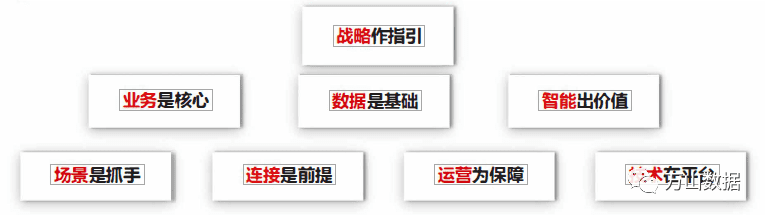
数据管理大爆发时期已经到来,向智能化方向发展。
五、产业级数据治理
从企业级数据治理到产业级数据治理。
产业链指的是包括供应链、服务链、物流链、金融链等高度协同的人、数据、设备、技术、资本等全要素的生产资源的全局配置情况。产业链具体来说,就是指各部门之间基于一定的技术经济相互关联关系,并按照特定的逻辑关系,和时空分布关系等客观形成的链条式的关联关系形态。
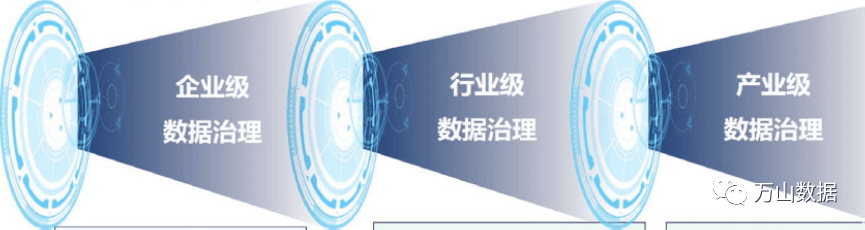
企业级数据治理:在单一企业范围内,由企业最高层直接主导或推动开展的数据治理活动,解决企业内部数据壁垒,确保数据可信可用的过程。
行业级数据治理:同一行业内,多个企业为了实现数据互通和互利, 基于统一数据标准,统筹开展数据治理活动,保证行业内数据共享流通顺畅的过程。
产业级数据治理:站在产业级视角, 对同一产业领域内的跨行业的企业数据进行归集和整合,打破行业壁垒,实现数据自由流通,促进产业级生产力提升。数字化转型网www.szhzxw.cn
六、数据治理发展趋势研究
数据已经成为企业的战略资产,企业从只关注数据的某个方面,到关注全生命周期的数据治理,从关注数据质量到同时关注安全合规以及用户隐私管理,同时引入更多新技术和新理念。
1、组织保障
- 通过以组织为核心的数据治理体系建设推动数据治理工作。
- 设立覆盖企业各层级、 业务条线的数据治理实体组织(或为现有组织赋予数据治理职能),并以先进、 智能的IT平台支撑数据管理的各项工作。数字化转型网www.szhzxw.cn
- 以公司最高政策文件形式表达高层对数据治理工作的重视。
- 统一数据语言和数据标准,保障数据质量。
2、平台支撑
从人工、工具数据治理到通过大数据分析技术实现智能化数据治理。
- 数据集成复杂度越来越高,对数据准确性要求也越来越高,人工治理无法满足数据管理要求,逐步通过平台化等技术手段,实现智能化数据管理, 满足业务对数据的需求。数字化转型网www.szhzxw.cn
- 元数据驱动数据模型的设计。
- 支持多类型数据库技术,如SQL、NoSQL、NewSQL。
- 多源异构数据整合必须简单便捷,通用统一操作界面实现数据同步整合,将是数据治理最重要的一步。
- 打造实时数据仓库。
- 实现即时的数据治理。即时发现数据质量问题,即时进行治理,保障下游数据分析应用的数据可用。
3、数据治理未来形态:基于SQL的可视化数据治理
- 所有的治理过程都用SQL实现,简单,易懂,可见。
- 任务设计和调度一体化。
- 数据处理逻辑在线验证。数字化转型网www.szhzxw.cn
4、模式转变
从传统模式向“数据上云,数据治理工作上平台”模式转变。
- 数据治理工作方式的转变:“数据+平台+应用” ,首先要实现数据上云,数据治理工作上平台。
- 数据应用方式的转变面向多类型数据应用(稳态、 敏态共存、 结构化及非结构化多类型共存),打造基于数据湖、数据中台的新应用模式。
- 数据特征的转变:大数据及人工智能时代,实现全类型全要素全生命周期、 全闭环的数据治理。
翻译:
Five trends in the development of data governance in the era of data elements include:
- Distributed data governance
- Asset-based data governance
- Value data governance
- Intelligent data governance
- Industrial data governance数字化转型网www.szhzxw.cn
First, distributed data governance
Key capabilities of distributed data governance include
Metadata: Metadata will become more important as a management tool, and unified metadata control is one of the key foundations for the success of distributed governance.
Blockchain: Blockchain has great application value in distributed data security, data quality stability, master data consistency and so on.
Federated learning: Federated learning helps to achieve multi-library data association computation, training algorithms and data models without frequent replication of data across libraries.
Heterogeneous fusion: The fusion governance of structured and unstructured data and the joint governance of batch and real-time data will be the new challenges facing distributed governance.
Cloud-edge collaboration: Data governance capabilities should be extended from the cloud to massive edge computing nodes, starting from the edge node to ensure the trust, reliability, and availability of data.数字化转型网www.szhzxw.cn
Second, asset-based data governance
From traditional data governance to capitalized data governance.
Registration system: After the data becomes an asset, it is necessary to establish a storage registration mechanism to ensure that each piece of data can be accurately, timely and effectively registered, so as to comprehensively calculate the total amount of data assets owned by the enterprise.
Confirmation of rights and responsibilities: the establishment of internal ownership and rights of data assets, and the establishment of the corresponding data recognition system, the formation of a “unified rights and responsibilities” management mechanism, to achieve data governance “each performs its own duties”.数字化转型网www.szhzxw.cn
Value evaluation: Data value is the basis of transaction pricing, and enterprise’s evaluation of data asset value is a new subject of enterprise data governance, which is particularly important for the preservation and appreciation of data assets of central and state-owned enterprises.
Third, value data governance
From technical data governance to value data governance.
Value orientation: oriented by business value, from the demand side to reverse promote data governance landing, not seeking to “cover all aspects” of the data scope, but for high-value and high-demand data for enterprises.
“Minimally invasive” : The data governance led by the technology department and often covering the entire data domain or the entire enterprise is increasingly weak in the era of big data, and the fixed-point and minimally invasive data governance focusing on pain points is more conducive to reducing costs and maximizing value.数字化转型网www.szhzxw.cn
Quantifiable and measurable: Data governance objectives are quantified, decomposed into measurable indicators, real-time presentation of the changes brought by various data governance work on enterprise data, intuitive presentation of data governance results and trends, and quantitative visibility of value.
Fourth, intelligent data governance
From manual data governance to intelligent data governance.
Intelligent generation of data standards: Intelligent technologies such as machine learning and semantic analysis are used to achieve intelligent formulation and dynamic optimization and adjustment of data standards.
Metadata intellisthesia: Intelligent touch points are used to realize rapid sensing, capture and collection of new metadata, and relationship exploration through knowledge graph.
Data quality intelligent error correction: Based on the accumulated knowledge base, the use of blockchain, machine learning and other technologies to achieve automatic error correction of data quality.数字化转型网www.szhzxw.cn
Data security intelligent protection: The use of semantic computing, feature matching, blockchain and other technologies to achieve data security intelligent classification, anti-tampering, intelligent audit, etc.
The explosion period of data management has arrived, and it is developing in the direction of intelligence.
Fifth, industrial-level data governance
From enterprise data governance to industrial data governance.
Industrial chain refers to the global allocation of production resources including supply chain, service chain, logistics chain, financial chain and other highly coordinated factors such as people, data, equipment, technology, capital and so on. Specifically, the industrial chain refers to the chain correlation between various departments based on a certain technical and economic correlation, and in accordance with specific logical relations, and spatial and temporal distribution relations.
Enterprise-level data governance: The process of addressing internal data barriers and ensuring that data is trusted and available within a single enterprise, directly led or driven by the highest levels of the enterprise.数字化转型网www.szhzxw.cn
Industry-level data governance: In order to achieve data interoperability and mutual benefit, multiple enterprises in the same industry coordinate data governance activities based on unified data standards to ensure the smooth flow of data sharing in the industry.
Industry-level data governance: From the perspective of industry level, collect and integrate cross-industry enterprise data in the same industry field, break industry barriers, realize the free flow of data, and promote the improvement of industrial productivity.数字化转型网www.szhzxw.cn
Sixth, research on the development trend of data governance
Data has become a strategic asset for enterprises, which have gone from focusing on only one aspect of data to data governance for the full lifecycle, from data quality to both security compliance and user privacy management, while introducing more new technologies and new ideas.
1. Organization guarantee
Promote data governance through the construction of organization-centered data governance system.
Set up a data governance entity organization covering all levels and business lines of the enterprise (or assign data governance functions to existing organizations), and support all work of data management with advanced and intelligent IT platforms.数字化转型网www.szhzxw.cn
Express senior management’s commitment to data governance in the form of the company’s highest policy document.
Unified data language and data standards to ensure data quality.
2. Platform support
From manual and tool data governance to intelligent data governance through big data analysis technology.
The complexity of data integration is getting higher and higher, and the requirements for data accuracy are also getting higher and higher. Manual governance cannot meet the requirements of data management, and intelligent data management is gradually realized through platformization and other technical means to meet the needs of business data.数字化转型网www.szhzxw.cn
Metadata drives the design of the data model.
Supports multiple types of database technologies, such as SQL, NoSQL, and NewSQL.
Multi-source heterogeneous data integration must be simple and convenient, and the most important step of data governance is to realize data synchronization integration through a common unified operation interface.
Build a real-time data warehouse.
Enable real-time data governance. Discover data quality issues in real time, treat them in real time, and ensure data availability for downstream data analysis applications.
3. Future form of data governance: SQL-based visual data governance
All the governance processes are implemented in SQL, which is simple, easy to understand and visible.
Integrated task design and scheduling.数字化转型网www.szhzxw.cn
Data processing logic online verification.
4. Mode change
From the traditional model to the “data on the cloud, data governance work on the platform” model.
The transformation of data governance work mode: “data + platform + application”, the first thing to achieve data on the cloud, data governance work on the platform.
The transformation of data application mode is oriented towards multi-type data application (steady state, sensitive state coexistence, structured and unstructured multi-type coexistence), creating a new application mode based on data lake and data center.数字化转型网www.szhzxw.cn
Transformation of data characteristics: In the era of big data and artificial intelligence, data governance of all types, all elements, full life cycle, and full closed-loop is realized.
本文由数字化转型网(www.szhzxw.cn)转载而成,来源于万山数据 ,作者万山数据;编辑/翻译:数字化转型网宁檬树。

免责声明: 本网站(https://www.szhzxw.cn/)内容主要来自原创、合作媒体供稿和第三方投稿,凡在本网站出现的信息,均仅供参考。本网站将尽力确保所提供信息的准确性及可靠性,但不保证有关资料的准确性及可靠性,读者在使用前请进一步核实,并对任何自主决定的行为负责。本网站对有关资料所引致的错误、不确或遗漏,概不负任何法律责任。
本网站刊载的所有内容(包括但不仅限文字、图片、LOGO、音频、视频、软件、程序等) 版权归原作者所有。任何单位或个人认为本网站中的内容可能涉嫌侵犯其知识产权或存在不实内容时,请及时通知本站,予以删除。