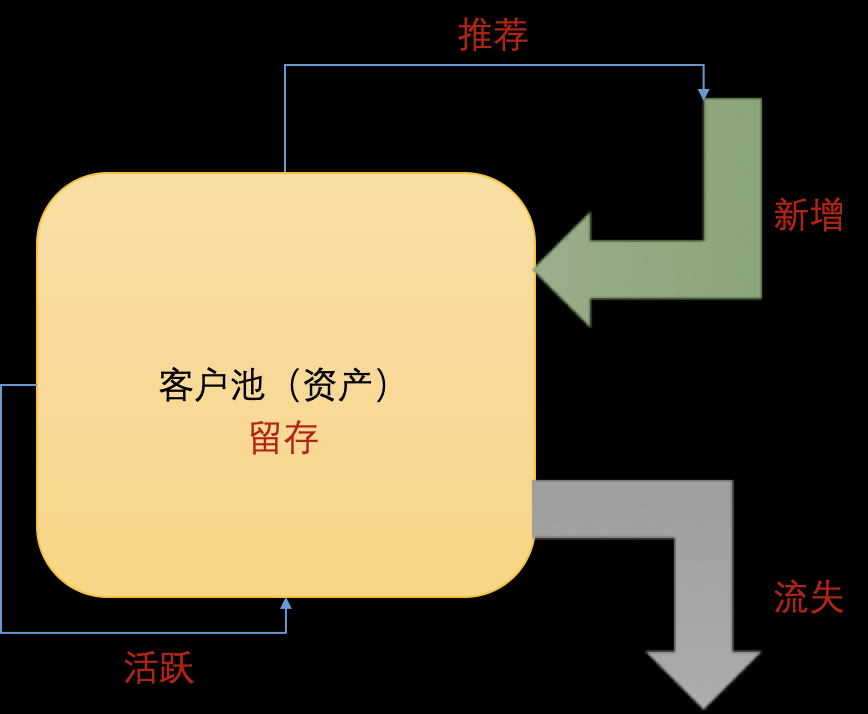
价值极为重要,但价值定义不清晰、无共识是数字化面临的巨大挑战,数字服务经济学解读了数字服务的客户价值、商业价值,这是数字服务吞噬世界的经济学基础。由此,我们可以更好洞察数字时代的各种现象,理解发展趋势。
一、数字服务经济学
价值是一个典型的经济学概念,每个人都知道创造客户价值很重要,许多理论都以价值为基础,每个企业都想用数字化创造价值,但缺乏清晰的价值定义,无法达成价值共识,是数字化面临的巨大挑战。
1. 传统经济学
大多数人对价值的理解都来自于我们中学时开始学习的政治经济学。价值,泛指客体对于主体表现出来的积极意义和有用性。价值又分为商品价值,对商品生产者而言,它是凝结在商品中无差别的人类劳动;使用价值,对商品使用者而言,商品在使用中的价值/有用性;交换价值,也叫价格,商品与其他商品或一般等价物交换的价值。由此衍生出商品价值量(商品成本)和劳动生产率的概念,商品价值量是制造商品所需要的社会必要劳动时间,劳动生产率的提升能够降低商品价值量。(百度词条《价值》,对价值有深入兴趣的可以参考维基词条《价值》《价值理论》) 数字化转型网www.szhzxw.cn
传统经济学是大多数企业都在遵循的运行原则,利润=收入-成本=商品数*(商品价格-商品成本),为了利润最大化,企业会改善商品/或通过垄断获取定价权以提高商品价格,并不断推动劳动生产率提升以降低商品成本。通常企业会倾向于制造更多的商品以获得更多利润,这也导致了企业容易盲目以生产为中心,扩大生产带来商品库存问题。(百度词条:《利润最大化原则》)
2. 服务经济学
传统经济学更适用于制造业,包括制造工业产品的工业制造业以及生产农业产品的农业。换成服务业,情况会略有不同,服务经济学增加了客户价值概念,服务经济学主要围绕用户服务构建,其客户价值=服务次数*次均价值,其商业价值利润=收入-成本=次数*(次均收入-次均成本)。从服务的视角看,制造业也是广义的服务类企业,通过制造产品为其客户提供服务,服务次数就是客户使用的商品数,这是为什么商品库存是个问题的原因。 数字化转型网www.szhzxw.cn
服务类企业也遵循利润最大化原则,服务次数最大化、次均收入最大化和次均成本最小化是利润最大化原则的自然衍生。因为同类服务的相互竞争导致次均收入会趋向平均/稳定,通常来说企业会把重点放在服务次数最大化和次均成本最小化的追求上,俗称降本增效。次数是核心,营销推广、连锁化是服务类企业的天然追求,目的是通过服务更多的客户来提高服务次数,从而创造更大的客户价值,最终创造出更大的商业价值。
与传统经济学相比,服务经济学最大的差异是其不确定性:
- 打破了确定性,投入未必带来产出
在传统经济学中,价值创造存在确定性,商品价值由投入的社会必要劳动时间决定,在劳动生产率稳定的情况下,投入大产出就大。
在服务经济学中,价值创造存在不确定性,服务的价值由客户决定,其客户价值=服务次数*次均价值,商业价值=次数*(次均收入-次均成本),不能带来次数的投入不产生任何价值。
3. 数字服务经济学
数字服务经济学当然归属于服务经济学,因此其客户价值与商业价值遵循同样的算法,客户价值=服务次数*次均价值,商业价值=次数*(次均收入-次均成本)。但数字服务跟传统服务存在一个最大的差异,就是服务是通过数字,而不是通过人工提供的,这一根本性的变化导致数字服务经济学相对于传统经济学和服务经济学是一种颠覆式创新性的存在。 数字化转型网www.szhzxw.cn
- 打破了服务边界/能力,助力服务次数最大化
传统服务由人工提供,人工只能在企业边界内为客户提供服务,人工服务能力有限,因此服务次数受到企业边界与人工能力的限制。
而数字服务打破了企业的服务边界,只要客户能接触到数字服务的地方都能获得服务,并且数字服务潜力无限易于扩展,这为数字服务次数最大化奠定了良好的基础。
- 服务边际成本极低,助力次均成本最小化
传统服务由人工在工作时间中提供,人工工作时间有限,人工费用需要分摊到次均成本中。因此传统企业做到后期,往往会尽量通过提高次均收入的方式来做大企业收益,通过降低次均成本的方式来降本增效,两条腿走路。
数字服务可以7*24小时提供服务,其主要成本是电费,并且在待机时电费更低,这导致数字服务的服务边际成本极低。虽然数字服务往往会存在较高的前期设施/研发成本,后期还存在一定的设施与研发升级成本,但较大的次数规模能够在次均成本中进行有效分摊。更低的次均成本让数字服务能够为更多客户带来更多的普惠服务,从而大大促进了业务创新。还记得当年支付宝内部曾说过,我们把每笔支付的成本降到了分,未来还可以更低,那些每笔支付成本为元的银行怎么能竞争,这是微信支付和支付宝联手把中国带入无现金社会的经济学原因。 数字化转型网www.szhzxw.cn
- 打破了劳动生产率/人效的概念,带来了非线性/指数型
人效,或者说劳动生产率对传统经济学和服务经济学都非常重要,因为劳动生产率直接决定其成本,其收益相对于组织的投入/规模呈线性的同步增长关系,大投入带来大产出。
但数字服务打破了传统经济学劳动生产率的概念,因为数字服务运行不依赖人,劳动生产率/人效不再成为获取商业价值的关键制约因素。这让传统的企业比较依据失效,这也给数字时代的企业带来了非线性/指数型增长的机会,例如企业往往会以自己的规模为美,更大的办公场地、更多的人员意味着更好的企业,就像传统的500强企业,但现在的新企业更强调服务的客户规模,自身的规模不再重要,像Instagram被10亿美元收购时仅仅只有13名员工,WhatsApp以190亿美元被收购时仅仅50名员工,其商业价值的关键是他们的数字服务(而不是员工)服务了海量用户。
二、理解数字时代的各种现象
不确定性、打破边界、击穿成本和非线性,理解了数字服务经济学的这些特征,我们才能更好洞察数字时代中发生的各种现象,理解发展趋势。 数字化转型网www.szhzxw.cn
1. 互联网模式、toVC和互联网转型
商业模式是典型的经济学应用。
“羊毛出在猪身上,狗买单”,这是典型的互联网商业模式。这种商业模式就是建立在数字服务极低的边际服务成本基础上,互联网公司以免费的方式向用户提供数字服务,获得大量的用户流量,然后再通过流量变现获取收益。这与传统企业是不同的,传统企业以商业价值(商业价值=收入-成本)为先,互联网企业以客户价值(客户价值=次数*次均价值)为先,先做大次数以做高客户价值,然后通过流量变现获取商业价值(商业价值=次数*(次均收入-次均成本))。这导致了前期像腾讯这样的互联网企业在缺乏流量变现能力时融资频频受挫,因为传统经济学找不到流量(次数)跟商业价值之间的关联关系。
随着BATJ等互联网公司成功带来的示范效应,大量资本纷纷涌入以弥补错失投资机会的遗憾,互联网模式后来被互联网圈这帮人玩成了toVC模式。流量(次数)的作用被夸大了,创业企业采用买流量的方式编造次数,只要次数达标就不缺投钱的人,但这种买来的流量(次数)未必是可持续的,与此同时,买流量大大推高了次均成本,破坏了企业的商业价值。
眼看着互联网公司的成功,众多传统企业纷纷涌入互联网赛道。一帮一辈子信奉商业价值(商业价值=收入-成本)的人来玩流量,一帮一直生活在确定性、线性的企业边界内,相信劳动生产率、相信大投入大产出的人来玩互联网模式,不交学费才怪,关键是最后什么也没学到。
2. 商业模式演变:从传统经济学迈向数字经济学
游戏业是从传统经济学迈向数字经济学的另一个好案例。 数字化转型网www.szhzxw.cn
最初的游戏业被认为遵循传统经济学,游戏企业投资制作游戏产品,然后卖份数,通过商业价值=商品数*(商品价格-商品成本)来赚取投资收益,这种商业模式下诞生了许多国际知名的游戏公司,例如暴雪、光荣、任天堂等。但这种商业模式面临盗版的巨大威胁,大量盗版让游戏企业无法获得本应获得的收入,即便是《仙剑奇侠传》之类的传奇产品也不能挽救行业的颓势,中国游戏业青黄不接,难以为继。
2001年大型多人在线角色扮演游戏《传奇》的出现,通过销售月卡,传奇开启了游戏业的新商业模式,其商业价值=月卡数*(月卡价格-月均成本),成就了盛大的商业奇迹。2004年的《征途》首次在游戏中引入了互联网模式,用免费吸引更多的用户进行游戏,然后通过流量转化变现,以通过做大客户价值的方式实现商业价值变现,游戏业称之为内购模式。
数字服务经济学给中国游戏业带来了新生。由于版权保护机制相对完善,许多国外游戏厂商依靠卖份数依然可以活的很好,从而活在更老的商业模式中,而国内游戏厂商从2004年开始就在按互联网模式疯狂内卷。通过端游、页游、手游的不断迭代,红海里杀出血路的中国游戏业战斗力爆表,内购模式不仅在国内成为了游戏业的主流商业模式,甚至出海向国外进行输出,游戏用户因此有了更多的游戏可玩,游戏厂商也因此赚的盆满钵满。在国外游戏厂商纷纷开始学习游戏内购模式的时候,中国游戏厂商已经悄然占据了世界领先的位置。 数字化转型网www.szhzxw.cn
整个软件业也经历了类似的商业模式演变。以售卖软件份数起家的微软、Adobe等企业都转向了类似点卡销售的SAAS模式,微软甚至学起了内购模式,如果你想使用Microsoft 365 Copilot,需要为增值服务额外支付每月30美元。
3. 资产骗局
数字服务经济学能够帮助我们更好识别现在市场上充斥的资产骗局,软件是资产、数据是资产。
这是传统经济学对我们的潜移默化,凝聚了许多社会劳动时间才能制造出来的软件、收集而来的数据是有价值的资产。这是软件外包商、数据设备提供商、数据软件开发商、各种数字化咨询服务商等合力形成的催眠话术,就算软件没用起来、数据只是堆在那里没用,但是我们至少有了软件、数据,甚至还可以计入“资产”中。
可真实的情况是,按照数字服务经济学,没有次数的软件、数据毫无价值。这不,在数字资产热后,面对不断堆积的数据、庞大的数字中台,不断膨胀的账单让企业们开始不得不直面现实,纷纷开始为盘活这些“资产”找出路。 数字化转型网www.szhzxw.cn

翻译:
Digital Value: The economics of digital services Eating the world
Value is extremely important, but the definition of value is not clear, no consensus is a huge challenge facing digitalization, digital service economics interprets the customer value of digital services, business value, which is the economic basis of digital services engulf the world. Thus, we can better insight into the various phenomena of the digital age and understand the development trend.
I. The economics of digital services
Value is a typical economic concept, everyone knows that creating customer value is very important, many theories are based on value, every enterprise wants to use digital to create value, but the lack of a clear definition of value, unable to reach a value consensus, is a huge challenge facing digitalization.
Traditional economics
Most people’s understanding of value comes from political economy, which we begin to study in high school. Value generally refers to the positive meaning and usefulness of the object to the subject. Value is divided into commodity value, which for commodity producers is the undifferentiated human labor condensed in commodities. Use-value, the value/usefulness of the commodity in use to the user of the commodity; Exchange value, also called price, is the value of a commodity in exchange for other commodities or general equivalents. This leads to the concepts of commodity value (cost of goods) and labor productivity. Commodity value is the socially necessary labor time required to produce goods, and the increase of labor productivity can reduce the quantity of commodity value. (Baidu entry “Value”, and those who are deeply interested in value can refer to the Wikipedia entry “Value” and “value theory”)
Traditional economics is the operating principle that most enterprises follow, profit = income – cost = number of commodities * (commodity price – commodity cost), in order to maximize profits, enterprises will improve commodities/or obtain pricing power through monopoly to increase commodity prices, and constantly promote the improvement of labor productivity to reduce commodity costs. Usually, enterprises tend to produce more goods to obtain more profits, which also leads to enterprises tend to blindly focus on production, and expand production will bring about the problem of commodity inventory. (Baidu entry: “Profit Maximization principle”) 数字化转型网www.szhzxw.cn
Service economics
Traditional economics is more applicable to manufacturing, including industrial manufacturing, which makes industrial products, and agriculture, which produces agricultural products. With the service industry, the situation will be slightly different. Service economics adds the concept of customer value. Service economics is mainly built around user service, and its customer value = number of services * average value, its business value profit = revenue – cost = number of times * (average revenue – average cost). From the perspective of service, the manufacturing industry is also a broad service enterprise, which provides services to its customers by manufacturing products, and the number of services is the number of goods used by customers, which is why commodity inventory is a problem.
Service enterprises also follow the profit maximization principle. The maximization of service times, the maximization of average revenue and the minimization of average cost are the natural derivatives of the profit maximization principle. Because of the competition between similar services, the average income will tend to be average/stable, generally speaking, enterprises will focus on the pursuit of maximizing the number of services and minimizing the average cost, commonly known as cost reduction and efficiency. Number is the core, marketing promotion, chain is the natural pursuit of service enterprises, the purpose is to serve more customers to improve the number of services, so as to create greater customer value, and ultimately create greater business value.
The biggest difference between service economics and traditional economics is its uncertainty:
Without certainty, inputs do not necessarily lead to outputs
In traditional economics, there is certainty in value creation, and the value of commodities is determined by the socially necessary labor time input. In the case of stable labor productivity, the output will be large if the input is large. 数字化转型网www.szhzxw.cn
In service economics, there is uncertainty in value creation, and the value of service is determined by the customer, whose customer value = number of services * average value, business value = number of times * (average income – average cost), and the input that does not bring the number of times does not produce any value.
Economics of digital services
Digital service economics of course belongs to service economics, so its customer value and business value follow the same algorithm, customer value = number of services * average value, business value = number of times * (average revenue – average cost). However, one of the biggest differences between digital services and traditional services is that services are provided by digital rather than manual services. This fundamental change leads to digital service economics being a subversive and innovative existence compared with traditional economics and service economics.
Break service boundaries/capabilities to help maximize the number of services
Traditional services are provided by humans, and humans can only provide services to customers within the boundaries of the enterprise. Therefore, the number of services is limited by the boundaries and capabilities of the enterprise. 数字化转型网www.szhzxw.cn
Digital services break the service boundaries of enterprises, as long as customers can access digital services wherever they can get services, and digital services have unlimited potential and are easy to expand, which lays a good foundation for maximizing the number of digital services.
The marginal cost of service is extremely low, which helps to minimize the average cost per second
The traditional service is provided by the labor in the working time, the labor time is limited, and the labor cost needs to be divided into the average cost. Therefore, in the later stage, traditional enterprises often try to increase the average income of enterprises by increasing the average income, reduce the cost and increase the efficiency by reducing the average cost, and walk on two legs.
Digital services can be available 7*24 hours, and their main cost is electricity, and electricity is lower when standby, which results in an extremely low marginal cost of service for digital services. Although digital services tend to have high upfront facility/R&D costs, and there is a certain amount of facility and R&D upgrade costs in the later stage, the larger number of times can be effectively shared in the average cost. Lower subaverage costs allow digital services to bring more inclusive services to more customers, which greatly promotes business innovation. I still remember that Alipay once said that we reduced the cost of each payment to points, and it can be lower in the future, and how can those banks with a cost of each payment be able to compete? This is the economic reason why wechat Pay and Alipay jointly brought China into a cashless society. 数字化转型网www.szhzxw.cn
It breaks the concept of labor productivity/human efficiency and brings nonlinear/exponential type
Human efficiency, or labor productivity, is very important to both traditional economics and service economics, because labor productivity directly determines its costs, and its benefits increase linearly with respect to the input/scale of the organization, and large inputs lead to large outputs.
But digital services break the traditional economic concept of labor productivity, because digital services do not rely on people to operate, labor productivity/human effectiveness is no longer a key constraint on obtaining business value. This makes the traditional comparison basis of enterprises ineffective, which also brings nonlinear/exponential growth opportunities to enterprises in the digital age. For example, enterprises tend to be beautiful in their own size, larger office space and more personnel mean better enterprises, just like the traditional top 500 enterprises, but now new enterprises pay more attention to the size of customers, and their own size is no longer important. Like Instagram, which had just 13 employees when it was acquired for $1 billion, and WhatsApp, which had 50 employees when it was acquired for $19 billion, the key to their business value is that their digital services (not their employees) serve a large number of users.
Understand the phenomena of the digital age
By understanding the characteristics of the economics of digital services, such as uncertainty, breaking boundaries, breakdown costs and nonlinearity, we can better understand the various phenomena and trends occurring in the digital age. 数字化转型网www.szhzxw.cn
Internet model, toVC and Internet transformation
Business models are typical applications of economics.
“The wool comes out of the pig, the dog pays” is a typical Internet business model. This business model is built on the basis of the extremely low marginal service cost of digital services, Internet companies provide digital services to users for free, obtain a large number of user traffic, and then obtain profits through the realization of traffic. This is different from traditional enterprises, which take business value (business value = revenue-cost) as the first priority, and Internet enterprises take customer value (customer value = number of times * average value of times) as the first priority, first make large number to make high customer value, and then obtain business value through traffic realization (business value = number of times * (average income – average cost of times)). This has led to frequent setbacks in the financing of Internet enterprises like Tencent in the lack of traffic realization ability in the early stage, because traditional economics can not find the correlation between traffic (number) and business value.
With the demonstration effect brought by the success of Internet companies such as BATJ, a large amount of capital poured in to make up for the regret of missing investment opportunities, and the Internet model was later played by the Internet circle into the toVC model. The role of traffic (number) is exaggerated, entrepreneurial enterprises use the way to buy traffic to make up the number of times, as long as the number of standards, there is no shortage of people to invest money, but this kind of bought traffic (number) is not necessarily sustainable, at the same time, buy traffic greatly pushed up the average cost, destroyed the business value of the enterprise.
Seeing the success of Internet companies, many traditional enterprises have poured into the Internet circuit. A group of people who believe in business value all their life (business value = income – cost) to play traffic, a group of people who have been living in a certain, linear enterprise boundary, believe in labor productivity, believe in large input and large output to play the Internet model, do not pay tuition is strange, the key is to learn nothing in the end.
Business model evolution: From traditional economics to digital economics
The games industry is another good example of the transition from traditional economics to digital economics. 数字化转型网www.szhzxw.cn
The original game industry is believed to follow the traditional economics, game enterprises invest in the production of game products, and then sell the number of copies, through the commercial value = number of goods * (commodity price – commodity cost) to earn investment income, this business model gave birth to many internationally renowned game companies, such as Blizzard, Glory, Nintendo and so on. However, this business model faces a huge threat from piracy, a large number of piracy so that game companies can not get the revenue they should get, even legendary products such as “Fairy Sword Legend” can not save the decline of the industry, China’s game industry is not able to catch up, it is difficult to sustain.
In 2001, the emergence of the massively multiplayer online role-playing game “Legend”, through the sale of monthly cards, Legend opened a new business model of the game industry, its business value = the number of monthly cards * (monthly card price – monthly average cost), and achieved a grand business miracle. In 2004, “Journey” introduced the Internet model for the first time in the game, attracting more users to play the game for free, and then cashing out through traffic conversion to realize commercial value by doing large customer value, which is called the internal purchase model in the game industry.
Digital service economics has brought new life to China’s game industry. Due to the relatively perfect copyright protection mechanism, many foreign game manufacturers can still live very well by relying on the number of copies sold, so as to live in the older business model, while domestic game manufacturers have been crazy in the Internet model since 2004. Through the continuous iteration of terminal games, page games and mobile games, the combat effectiveness of the Chinese game industry in the Red Sea has exploded, and the internal purchase model has not only become the mainstream business model of the game industry in China, but even the export to foreign countries, game users have more games to play, and game manufacturers have earned a pot full of money. While foreign game manufacturers have begun to learn the in-game purchase model, Chinese game manufacturers have quietly occupied the world’s leading position. 数字化转型网www.szhzxw.cn
The software industry as a whole has undergone a similar business model evolution. Companies that started by selling software copies, such as Microsoft and Adobe, have moved to a SAAS model similar to point card sales, and Microsoft has even learned the in-app purchase model, if you want to use Microsoft 365 Copilot, you need to pay an additional $30 per month for value-added services.
Asset scams
The economics of digital services can help us better identify the asset scams now flooding the market, software is an asset, data is an asset.
This is the traditional economics to us imperceptibly, condensed a lot of social labor time to produce software, collected data is a valuable asset. This is the hypnosis of software outsourcers, data equipment providers, data software developers, various digital consulting service providers, etc., even if the software is useless, the data is just stacked there useless, but we at least have the software, data, and even can be included in the “assets”. 数字化转型网www.szhzxw.cn
But the real situation is that according to the economics of digital services, software and data without frequency are worthless. This is not, in the digital assets hot, in the face of continuous accumulation of data, huge digital center, the swelling bill so that enterprises began to face the reality, have begun to find a way out for the revitalization of these “assets”.
本文由数字化转型网(www.szhzxw.cn)转载而成,来源于大卫谈;编辑/翻译:数字化转型网宁檬树。
免责声明: 本网站(https://www.szhzxw.cn/)内容主要来自原创、合作媒体供稿和第三方投稿,凡在本网站出现的信息,均仅供参考。本网站将尽力确保所提供信息的准确性及可靠性,但不保证有关资料的准确性及可靠性,读者在使用前请进一步核实,并对任何自主决定的行为负责。本网站对有关资料所引致的错误、不确或遗漏,概不负任何法律责任。
本网站刊载的所有内容(包括但不仅限文字、图片、LOGO、音频、视频、软件、程序等) 版权归原作者所有。任何单位或个人认为本网站中的内容可能涉嫌侵犯其知识产权或存在不实内容时,请及时通知本站,予以删除。