数字化转型运用5G、人工智能、大数据、云计算等新一代数字技术,改变企业为客户创造价值的业务方式,进而推动企业业务实现新的增长。
数字化转型对业务的流程、场景、关系、员工等要素进行了重新定义,内部完成全面在线,外部适应各种变化,从前端到后端,实现自动化和智能化,最终创造价值。
一、数字化转型3个阶段
企业的数字化转型包括信息化、数字化、数智化三个阶段,并非一个阶段结束才能进入到下一个阶段。“三化”不是彼此割裂、相互独立的,而是你中有我,我中有你,循序渐进,一脉相承。
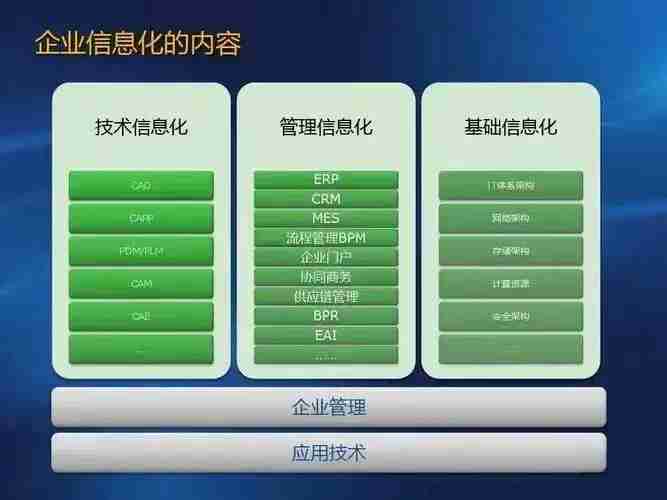
1. 信息化→业务数据化
信息化是将企业在生产经营过程中产生的业务信息进行记录、储存和管理,通过电子终端呈现,便于信息的传播与沟通。
它可以使企业内各方面的人员清楚的了解到“业务状态是怎样的”,“流程走到了哪一步”等,从而有利于生产要素组合优化的决策,合理配置企业资源,增强企业的应变能力。
2. 数字化→数据业务化
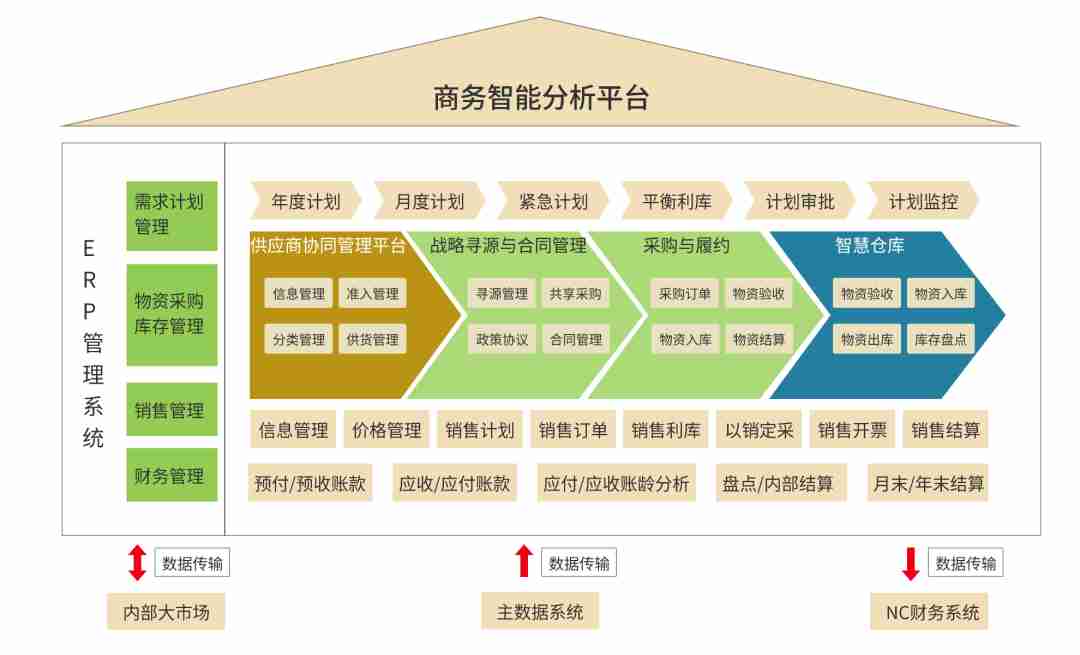
信息化建设过程中各个信息系统之间缺乏互通,形成了信息孤岛。
数字化打通各个信息孤岛,让数据得以连接。通过基于大量沉淀在业务系统中的运营数据,对这些数据进行综合地、多维地分析,对企业的运作逻辑进行数字建模、优化,指导并服务于企业的日常运营。
这个过程,是技术实现的过程,更是思维模式转变的过程。

3. “数据+业务”
智能化数智化是数字化和智能化的合称,主要是指:
在数字与智能技术(大数据、AI、云计算、区块链、物联网、5G等)手段的支持下,建立决策机制的自优化模型,实现状态感知、实时分析、科学决策、智能化分析与管理、精准执行的能力。
借助数字化模拟人类智能,让智能数字化,进而应用于系统决策与运筹等能力。
通过以上2种能力,帮助企业优化现有业务价值链和管理价值链,增收节支、提效避险,实现从业务运营到产品/服务的创新,提升用户体验,构建企业新的竞争优势,进而实现企业的转型升级。
二、数字化转型2种分类
根据数字化转型对企业现有业务改变的程度,可将数字化转型划分为“存量业务优化”“增量业务创新”两类,对应不同的商业战略和数字化战略。数字化转型网www.szhzxw.cn
1. 存量业务优化
存量业务优化是指基于现有的商业模式,利用高效的数据技术和算法,进行生产运营数字化转型,获取更低成本和更好体验之间的平衡,降低运营成本或为业务提供增量。
- 例如某家电企业利用人工智能图像识别技术,提升产品生产质量管控。
- 某跨国集团企业利用财务机器人RPA,提升财务管理效率,减少人力投入。
- 某大消费企业整合线上线下渠道,打造消费者一致体验,并构建私域流量。
- 某地产企业搭建企业移动平台,建设员工智慧办公工具,提升员工工作与协同的效率和体验等。
2. 增量业务创新
增量业务创新是指基于数据重构商业模式或基于数据拓展全新业务,包括产品、服务以及商业模式的数字化转型。
- 例如某音乐出品企业用数字化音乐下载替代了传统的唱片和CD,后来,在线音乐播放又替代了音乐下载。
- 某传统超市实现线上线下一体化,从传统零售向新零售转变;
- 某传统运营商向外界提供选址服务。
- 某农产品企业打造区块链追溯技术平台,将产品与服务的追溯能力和平台社会化,产生全新的服务能力和收入。
- 某传统药企通过搭建会员体系,聚合大健康资源,搭建大健康生态圈,开拓全新大健康业务模式等。
三、数字化转型3大价值
1. 价值效益类别一:生产运营优化
生产运营优化类价值效益相应的业务体系本身一般不会有本质性的转变。主要基于传统存量业务,价值创造和传递活动主要集中在企业内部价值链,价值获取主要来源于传统产品规模化生产与交易。
生产运营优化类价值效益主要包括效率提升、成本降低和质量提高等方面。
在效率提升方面,主要包括提高规模化效率和多样化效率;在成本降低方面包括降低研发成本、生产成本、管理成本和交易成本;在质量提高方面主要包括提高设计质量、生产/服务质量、采购及供应商协作质量和全要素全过程质量。
2. 价值效益类别二:产品/服务创新
产品/服务创新类价值效益相应的业务体系仍然保持总体不大变,主要专注于拓展基于传统业务的延伸服务,价值创造和传递活动沿着产品/服务链延长价值链,开辟业务增量发展空间,价值获取主要来源于已有技术/产品体系的增量价值。产品/服务创新类价值效益主要包括新技术/新产品、服务延伸与增值、主营业务增长等方面。
3. 价值效益类别三:业态转变
业态转变类价值效益相应的业务体系通常会发生颠覆式创新,主要专注于发展壮大数字业务,形成符合数字经济规律的新型业务体系。
价值创造和传递活动由线性关联的价值链、企业内部价值网络转变为开放价值生态,价值获取主要来源于与生态合作伙伴共建的业务生态。业态转变类价值效益主要包括为用户/生态合作伙伴连接与赋能、数字新业务和绿色可持续发展等方面。
数字化转型网www.szhzxw.cn
翻译:
Digital transformation uses 5G, artificial intelligence, big data, cloud computing and other next-generation digital technologies to change the way enterprises create value for customers, thus driving new growth of enterprise business.
Digital transformation redefines the business process, scene, relationship, staff and other elements, completes the internal online, ADAPTS to various changes externally, realizes automation and intelligence from the front end to the back end, and finally creates value.
Three stages of digital transformation
The digital transformation of enterprises includes three stages: informatization, digitalization and digitalization. It is not necessary to enter the next stage at the end of one stage. The “three modernizations” are not separated from each other and independent of each other. Instead, they are interconnected with each other and each of us is in the same line.
Informatization → business data
Informationization is to record, store and manage business information generated in the process of production and operation of enterprises, and present it through electronic terminals to facilitate the dissemination and communication of information.
It can make personnel in all aspects of the enterprise clearly understand “what is the state of the business” and “what step the process has come to”, so as to facilitate the decision of the combination and optimization of production factors, reasonable allocation of enterprise resources, and enhance the resilience of the enterprise.
Digitalization → data service
In the process of information construction, there is a lack of communication among various information systems, which forms information islands.
Digitization opens up various information islands, so that data can be connected. Based on a large number of operation data deposited in the business system, the data is analyzed comprehensively and multidimensional, and the operation logic of the enterprise is digitally modeled and optimized, so as to guide and serve the daily operation of the enterprise.
This process is the process of technology realization, but also the process of thinking mode transformation.
“Data + Service”
Intelligent number intellectualization is a combination of digitalization and intelligence, which mainly refers to:
With the support of digital and intelligent technologies (big data, AI, cloud computing, blockchain, Internet of Things, 5G, etc.), the self-optimization model of decision-making mechanism will be established to realize the ability of state perception, real-time analysis, scientific decision-making, intelligent analysis and management, and accurate execution.
With the help of digital simulation of human intelligence, let the intelligence digital, and then applied to the decision-making and operation of the system.
Through the above two capabilities, we can help enterprises optimize the existing business value chain and management value chain, increase income and reduce expenditure, improve efficiency and avoid risk, realize the innovation from business operation to product/service, improve user experience, build new competitive advantages, and then realize the transformation and upgrading of enterprises.
Two kinds of digital transformation
According to the degree to which digital transformation changes the existing business of enterprises, digital transformation can be divided into two categories: “stock business optimization” and “incremental business innovation”, which correspond to different business strategies and digital strategies.
Stock business optimization
Inventory business optimization refers to the digital transformation of production and operation based on the existing business model, using efficient data technology and algorithm, to achieve a balance between lower cost and better experience, reduce operating costs or provide incremental business.
For example, a household appliance company uses artificial intelligence image recognition technology to improve product production quality control.
A multinational group enterprise uses financial robot RPA to improve the efficiency of financial management and reduce manpower input.
A large consumer enterprise integrates online and offline channels to create a consistent consumer experience and build private traffic.
A real estate enterprise builds an enterprise mobile platform, builds intelligent office tools for employees, and improves the efficiency and experience of employees’ work and collaboration.
Incremental business innovation
Incremental business innovation refers to the reconstruction of business model based on data or the expansion of new business based on data, including the digital transformation of products, services and business models.
For example, a music producer replaced traditional records and CDS with digital music downloads, and later, online music streaming replaced music downloads.
A traditional supermarket realized online and offline integration, transforming from traditional retail to new retail;
A traditional operator provides location service to the outside world.
An agricultural product enterprise builds a blockchain traceability technology platform, socializes the traceability ability and platform of products and services, and generates brand-new service ability and revenue.
A traditional pharmaceutical company builds a membership system, aggregates great health resources, builds a great health ecosystem, and develops a new big health business model.
Three major values of digital transformation
Value benefit Category 1: production and operation optimization
Production and operation optimization class value benefit corresponding to the business system itself generally will not have the essential change. It is mainly based on traditional stock business, value creation and transmission activities are mainly concentrated in the enterprise’s internal value chain, and value acquisition mainly comes from the large-scale production and trading of traditional products.
Production and operation optimization value benefits mainly include efficiency improvement, cost reduction and quality improvement.
In terms of efficiency improvement, it mainly includes improving scale efficiency and diversification efficiency; The cost reduction includes the reduction of research and development cost, production cost, management cost and transaction cost; In terms of quality improvement, it mainly includes design quality, production/service quality, procurement and supplier cooperation quality and the whole process quality of factors.
Value Benefit Category 2: Product/service innovation
The business system corresponding to the value benefit of product/service innovation still maintains the overall little change, mainly focusing on expanding extended services based on traditional business, value creation and delivery activities extend the value chain along the product/service chain, opening up space for business incremental development, value acquisition mainly comes from the incremental value of the existing technology/product system. Product/service innovation value benefits mainly include new technology/new products, service extension and value-added, main business growth and so on.
Value benefit Category 3: Business mode transformation
The business system corresponding to the value and benefit of business form transformation usually has disruptive innovation, mainly focusing on the development and expansion of digital business, forming a new business system in line with the law of digital economy.
The value creation and transmission activities have changed from linearly related value chain and internal value network to open value ecology, and value acquisition mainly comes from the business ecology jointly built with ecological partners. The value benefits of business mode transformation mainly include user/ecological partner connection and empowerment, digital new business and green sustainable development.
本文由数字化转型网(www.szhzxw.cn)转载而成,来源:国云数据;编辑/翻译:数字化转型网宁檬树。

免责声明: 本网站(https://www.szhzxw.cn/)内容主要来自原创、合作媒体供稿和第三方投稿,凡在本网站出现的信息,均仅供参考。本网站将尽力确保所提供信息的准确性及可靠性,但不保证有关资料的准确性及可靠性,读者在使用前请进一步核实,并对任何自主决定的行为负责。本网站对有关资料所引致的错误、不确或遗漏,概不负任何法律责任。
本网站刊载的所有内容(包括但不仅限文字、图片、LOGO、音频、视频、软件、程序等) 版权归原作者所有。任何单位或个人认为本网站中的内容可能涉嫌侵犯其知识产权或存在不实内容时,请及时通知本站,予以删除。