
一、一图读懂数字化转型网szhzxw.cn
二、《意见》解读
数据基础制度建设事关国家发展和安全大局。《关于构建数据基础制度更好发挥数据要素作用的意见》(“数据二十条”)19日对外发布。意见出台的总体考虑是什么?怎样理解其内涵?记者就此采访了国家发展改革委负责同志。
问:“数据二十条”出台的背景是什么?数字化转型网szhzxw.cn
答:数据作为新型生产要素,具有无形性、非消耗性等特点,可以接近零成本无限复制,对传统产权、流通、分配、治理等制度提出新挑战,亟需构建与数字生产力发展相适应的生产关系,不断解放和发展数字生产力。按照党中央、国务院决策部署,国家发展改革委牵头研究起草“数据二十条”,组建跨学科专家队伍,赴多地深入调研,并吸纳了各方面有关意见。习近平总书记主持召开中央全面深化改革委员会第二十六次会议,审议通过了“数据二十条”。
问:构建数据基础制度体系有哪些重大意义?数字化转型网szhzxw.cn
答:构建数据基础制度体系,是新时代我国改革开放事业持续向纵深推进的标志性、全局性、战略性举措,有利于充分发挥数据要素作用,赋能实体经济,推动高质量发展;有利于做强做优做大数字经济,应对科技革命和产业变革,构筑国际竞争新优势;有利于统筹分配效率与公平,推动全民共享数字经济发展红利,促进实现共同富裕;有利于提高数据要素治理效能,助力国家治理体系和治理能力现代化。
问:怎样理解“数据二十条”的主要内容?
答:把握一条主线。坚持促进数据合规高效流通使用、赋能实体经济这一主线,以充分实现数据要素价值、促进全体人民共享数字经济发展红利为目标。
构建四个制度。建立保障权益、合规使用的数据产权制度,探索数据产权结构性分置制度,建立数据资源持有权、数据加工使用权、数据产品经营权“三权分置”的数据产权制度框架;建立合规高效、场内外结合的数据要素流通和交易制度,从规则、市场、生态、跨境等四个方面构建适应我国制度优势的数据要素市场体系;建立体现效率、促进公平的数据要素收益分配制度,在初次分配阶段,按照“谁投入、谁贡献、谁受益”原则,推动数据要素收益向数据价值和使用价值创造者合理倾斜,在二次分配、三次分配阶段,重点关注公共利益和相对弱势群体,防止和依法规制资本在数据领域无序扩张形成市场垄断等各类风险挑战;建立安全可控、弹性包容的数据要素治理制度,构建政府、企业、社会多方协同的治理模式。数字化转型网szhzxw.cn
推进四项措施。加强党对构建数据基础制度工作的全面领导;加大政策支持力度,做大做强数据要素型企业;积极鼓励试验探索,支持浙江等地区和有条件的行业、企业先行先试;稳步推进制度建设,逐步完善数据产权界定、数据流通和交易等主要领域关键环节的政策及标准。
问:“数据二十条”提出数据产权“三权分置”的相关考虑是什么?
答:在数据生产、流通、使用等过程中,个人、企业、社会、国家等相关主体对数据有着不同利益诉求,且呈现复杂共生、相互依存、动态变化等特点,传统权利制度框架难以突破数据产权困境。
“数据二十条”以解决市场主体遇到的实际问题为导向,创新数据产权观念,淡化所有权、强调使用权,聚焦数据使用权流通,创造性提出建立数据资源持有权、数据加工使用权和数据产品经营权“三权分置”的数据产权制度框架,构建中国特色数据产权制度体系。
问:“数据二十条”提出构建多层次数据交易市场体系有什么考虑?
答:由于数据特性复杂,数据交易存在确权难、定价难、互信难、监管难等挑战。“数据二十条”提出从流通规则、交易市场、服务生态等方面加强数据流通交易顶层设计,建立数据流通准入标准规则,探索开展数据质量标准化体系建设;统筹优化全国数据交易场所规划布局,出台数据交易场所管理办法,构建多层次市场交易体系;培育数据商和第三方专业服务机构两类主体。
问:下一步,在推动“数据二十条”落实方面有哪些安排?
答:一是健全政策顶层设计。围绕“数据二十条”不断丰富完善数据要素各方面制度体系和配套政策,打造“1+N”数据基础制度体系。数字化转型网szhzxw.cn
二是推进实施试点示范。在有条件的地方和行业开展数据要素流通使用试点示范,推动公共数据、企业数据、个人数据合规高效流通使用,赋能实体经济发展。
三是培育数据要素市场。构建多层次、多元化数据要素市场生态体系,统筹数据交易市场建设,规范数据交易管理,推进数据交易场所和数据商功能分离。
四是夯实数据要素基础设施。探索建设全国一体化数据要素登记存证平台,推进数据要素领域创新平台布局,立体化推动“东数西算”工程,形成“算力”和“数据”相结合的数据产业生态体系。
五是强化数据要素高质量供给。健全完善公共数据授权运营机制,制定促进公共数据开发利用的政策法规,服务社会公共管理,赋能实体经济发展。完善政策工具箱,引导大型央企国企、大型互联网企业加大数据流通使用,赋能中小企业数字化转型。
六是加强工作整体统筹力度。发挥数字经济发展部际联席会议作用,促进跨地区跨部门跨层级协同联动,定期对数据基础制度建设情况进行评估,适时进行动态调整,推动数据基础制度体系不断丰富完善。(新华社记者潘洁)
三、意见全文:中共中央、国务院关于构建数据基础制度更好发挥数据要素作用的意见(2022年12月2日)数字化转型网szhzxw.cn
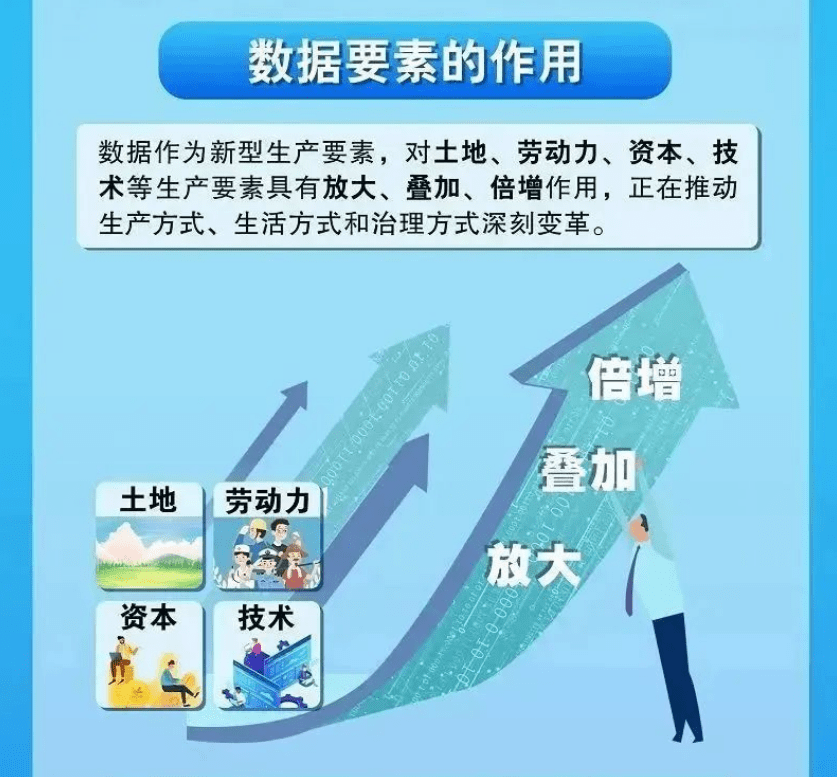
数据作为新型生产要素,是数字化、网络化、智能化的基础,已快速融入生产、分配、流通、消费和社会服务管理等各环节,深刻改变着生产方式、生活方式和社会治理方式。数据基础制度建设事关国家发展和安全大局。为加快构建数据基础制度,充分发挥我国海量数据规模和丰富应用场景优势,激活数据要素潜能,做强做优做大数字经济,增强经济发展新动能,构筑国家竞争新优势,现提出如下意见。
1、总体要求
(一)指导思想。以习近平新时代中国特色社会主义思想为指导,深入贯彻党的二十大精神,完整、准确、全面贯彻新发展理念,加快构建新发展格局,坚持改革创新、系统谋划,以维护国家数据安全、保护个人信息和商业秘密为前提,以促进数据合规高效流通使用、赋能实体经济为主线,以数据产权、流通交易、收益分配、安全治理为重点,深入参与国际高标准数字规则制定,构建适应数据特征、符合数字经济发展规律、保障国家数据安全、彰显创新引领的数据基础制度,充分实现数据要素价值、促进全体人民共享数字经济发展红利,为深化创新驱动、推动高质量发展、推进国家治理体系和治理能力现代化提供有力支撑。
(二)工作原则
——遵循发展规律,创新制度安排。充分认识和把握数据产权、流通、交易、使用、分配、治理、安全等基本规律,探索有利于数据安全保护、有效利用、合规流通的产权制度和市场体系,完善数据要素市场体制机制,在实践中完善,在探索中发展,促进形成与数字生产力相适应的新型生产关系。
——坚持共享共用,释放价值红利。合理降低市场主体获取数据的门槛,增强数据要素共享性、普惠性,激励创新创业创造,强化反垄断和反不正当竞争,形成依法规范、共同参与、各取所需、共享红利的发展模式。
——强化优质供给,促进合规流通。顺应经济社会数字化转型发展趋势,推动数据要素供给调整优化,提高数据要素供给数量和质量。建立数据可信流通体系,增强数据的可用、可信、可流通、可追溯水平。实现数据流通全过程动态管理,在合规流通使用中激活数据价值。
——完善治理体系,保障安全发展。统筹发展和安全,贯彻总体国家安全观,强化数据安全保障体系建设,把安全贯穿数据供给、流通、使用全过程,划定监管底线和红线。加强数据分类分级管理,把该管的管住、该放的放开,积极有效防范和化解各种数据风险,形成政府监管与市场自律、法治与行业自治协同、国内与国际统筹的数据要素治理结构。数字化转型网szhzxw.cn
——深化开放合作,实现互利共赢。积极参与数据跨境流动国际规则制定,探索加入区域性国际数据跨境流动制度安排。推动数据跨境流动双边多边协商,推进建立互利互惠的规则等制度安排。鼓励探索数据跨境流动与合作的新途径新模式。
2、建立保障权益、合规使用的数据产权制度
探索建立数据产权制度,推动数据产权结构性分置和有序流通,结合数据要素特性强化高质量数据要素供给;在国家数据分类分级保护制度下,推进数据分类分级确权授权使用和市场化流通交易,健全数据要素权益保护制度,逐步形成具有中国特色的数据产权制度体系。
(三)探索数据产权结构性分置制度。建立公共数据、企业数据、个人数据的分类分级确权授权制度。根据数据来源和数据生成特征,分别界定数据生产、流通、使用过程中各参与方享有的合法权利,建立数据资源持有权、数据加工使用权、数据产品经营权等分置的产权运行机制,推进非公共数据按市场化方式“共同使用、共享收益”的新模式,为激活数据要素价值创造和价值实现提供基础性制度保障。研究数据产权登记新方式。在保障安全前提下,推动数据处理者依法依规对原始数据进行开发利用,支持数据处理者依法依规行使数据应用相关权利,促进数据使用价值复用与充分利用,促进数据使用权交换和市场化流通。审慎对待原始数据的流转交易行为。
(四)推进实施公共数据确权授权机制。对各级党政机关、企事业单位依法履职或提供公共服务过程中产生的公共数据,加强汇聚共享和开放开发,强化统筹授权使用和管理,推进互联互通,打破“数据孤岛”。鼓励公共数据在保护个人隐私和确保公共安全的前提下,按照“原始数据不出域、数据可用不可见”的要求,以模型、核验等产品和服务等形式向社会提供,对不承载个人信息和不影响公共安全的公共数据,推动按用途加大供给使用范围。推动用于公共治理、公益事业的公共数据有条件无偿使用,探索用于产业发展、行业发展的公共数据有条件有偿使用。依法依规予以保密的公共数据不予开放,严格管控未依法依规公开的原始公共数据直接进入市场,保障公共数据供给使用的公共利益。
(五)推动建立企业数据确权授权机制。对各类市场主体在生产经营活动中采集加工的不涉及个人信息和公共利益的数据,市场主体享有依法依规持有、使用、获取收益的权益,保障其投入的劳动和其他要素贡献获得合理回报,加强数据要素供给激励。鼓励探索企业数据授权使用新模式,发挥国有企业带头作用,引导行业龙头企业、互联网平台企业发挥带动作用,促进与中小微企业双向公平授权,共同合理使用数据,赋能中小微企业数字化转型。支持第三方机构、中介服务组织加强数据采集和质量评估标准制定,推动数据产品标准化,发展数据分析、数据服务等产业。政府部门履职可依法依规获取相关企业和机构数据,但须约定并严格遵守使用限制要求。
(六)建立健全个人信息数据确权授权机制。对承载个人信息的数据,推动数据处理者按照个人授权范围依法依规采集、持有、托管和使用数据,规范对个人信息的处理活动,不得采取“一揽子授权”、强制同意等方式过度收集个人信息,促进个人信息合理利用。探索由受托者代表个人利益,监督市场主体对个人信息数据进行采集、加工、使用的机制。对涉及国家安全的特殊个人信息数据,可依法依规授权有关单位使用。加大个人信息保护力度,推动重点行业建立完善长效保护机制,强化企业主体责任,规范企业采集使用个人信息行为。创新技术手段,推动个人信息匿名化处理,保障使用个人信息数据时的信息安全和个人隐私。数字化转型网szhzxw.cn
(七)建立健全数据要素各参与方合法权益保护制度。充分保护数据来源者合法权益,推动基于知情同意或存在法定事由的数据流通使用模式,保障数据来源者享有获取或复制转移由其促成产生数据的权益。合理保护数据处理者对依法依规持有的数据进行自主管控的权益。在保护公共利益、数据安全、数据来源者合法权益的前提下,承认和保护依照法律规定或合同约定获取的数据加工使用权,尊重数据采集、加工等数据处理者的劳动和其他要素贡献,充分保障数据处理者使用数据和获得收益的权利。保护经加工、分析等形成数据或数据衍生产品的经营权,依法依规规范数据处理者许可他人使用数据或数据衍生产品的权利,促进数据要素流通复用。建立健全基于法律规定或合同约定流转数据相关财产性权益的机制。在数据处理者发生合并、分立、解散、被宣告破产时,推动相关权利和义务依法依规同步转移。
3、建立合规高效、场内外结合的数据要素流通和交易制度
完善和规范数据流通规则,构建促进使用和流通、场内场外相结合的交易制度体系,规范引导场外交易,培育壮大场内交易;有序发展数据跨境流通和交易,建立数据来源可确认、使用范围可界定、流通过程可追溯、安全风险可防范的数据可信流通体系。
(八)完善数据全流程合规与监管规则体系。建立数据流通准入标准规则,强化市场主体数据全流程合规治理,确保流通数据来源合法、隐私保护到位、流通和交易规范。结合数据流通范围、影响程度、潜在风险,区分使用场景和用途用量,建立数据分类分级授权使用规范,探索开展数据质量标准化体系建设,加快推进数据采集和接口标准化,促进数据整合互通和互操作。支持数据处理者依法依规在场内和场外采取开放、共享、交换、交易等方式流通数据。鼓励探索数据流通安全保障技术、标准、方案。支持探索多样化、符合数据要素特性的定价模式和价格形成机制,推动用于数字化发展的公共数据按政府指导定价有偿使用,企业与个人信息数据市场自主定价。加强企业数据合规体系建设和监管,严厉打击黑市交易,取缔数据流通非法产业。建立实施数据安全管理认证制度,引导企业通过认证提升数据安全管理水平。
(九)统筹构建规范高效的数据交易场所。加强数据交易场所体系设计,统筹优化数据交易场所的规划布局,严控交易场所数量。出台数据交易场所管理办法,建立健全数据交易规则,制定全国统一的数据交易、安全等标准体系,降低交易成本。引导多种类型的数据交易场所共同发展,突出国家级数据交易场所合规监管和基础服务功能,强化其公共属性和公益定位,推进数据交易场所与数据商功能分离,鼓励各类数据商进场交易。规范各地区各部门设立的区域性数据交易场所和行业性数据交易平台,构建多层次市场交易体系,推动区域性、行业性数据流通使用。促进区域性数据交易场所和行业性数据交易平台与国家级数据交易场所互联互通。构建集约高效的数据流通基础设施,为场内集中交易和场外分散交易提供低成本、高效率、可信赖的流通环境。
(十)培育数据要素流通和交易服务生态。围绕促进数据要素合规高效、安全有序流通和交易需要,培育一批数据商和第三方专业服务机构。通过数据商,为数据交易双方提供数据产品开发、发布、承销和数据资产的合规化、标准化、增值化服务,促进提高数据交易效率。在智能制造、节能降碳、绿色建造、新能源、智慧城市等重点领域,大力培育贴近业务需求的行业性、产业化数据商,鼓励多种所有制数据商共同发展、平等竞争。有序培育数据集成、数据经纪、合规认证、安全审计、数据公证、数据保险、数据托管、资产评估、争议仲裁、风险评估、人才培训等第三方专业服务机构,提升数据流通和交易全流程服务能力。
(十一)构建数据安全合规有序跨境流通机制。开展数据交互、业务互通、监管互认、服务共享等方面国际交流合作,推进跨境数字贸易基础设施建设,以《全球数据安全倡议》为基础,积极参与数据流动、数据安全、认证评估、数字货币等国际规则和数字技术标准制定。坚持开放发展,推动数据跨境双向有序流动,鼓励国内外企业及组织依法依规开展数据跨境流动业务合作,支持外资依法依规进入开放领域,推动形成公平竞争的国际化市场。针对跨境电商、跨境支付、供应链管理、服务外包等典型应用场景,探索安全规范的数据跨境流动方式。统筹数据开发利用和数据安全保护,探索建立跨境数据分类分级管理机制。对影响或者可能影响国家安全的数据处理、数据跨境传输、外资并购等活动依法依规进行国家安全审查。按照对等原则,对维护国家安全和利益、履行国际义务相关的属于管制物项的数据依法依规实施出口管制,保障数据用于合法用途,防范数据出境安全风险。探索构建多渠道、便利化的数据跨境流动监管机制,健全多部门协调配合的数据跨境流动监管体系。反对数据霸权和数据保护主义,有效应对数据领域“长臂管辖”。
4、建立体现效率、促进公平的数据要素收益分配制度
顺应数字产业化、产业数字化发展趋势,充分发挥市场在资源配置中的决定性作用,更好发挥政府作用。完善数据要素市场化配置机制,扩大数据要素市场化配置范围和按价值贡献参与分配渠道。完善数据要素收益的再分配调节机制,让全体人民更好共享数字经济发展成果。
(十二)健全数据要素由市场评价贡献、按贡献决定报酬机制。结合数据要素特征,优化分配结构,构建公平、高效、激励与规范相结合的数据价值分配机制。坚持“两个毫不动摇”,按照“谁投入、谁贡献、谁受益”原则,着重保护数据要素各参与方的投入产出收益,依法依规维护数据资源资产权益,探索个人、企业、公共数据分享价值收益的方式,建立健全更加合理的市场评价机制,促进劳动者贡献和劳动报酬相匹配。推动数据要素收益向数据价值和使用价值的创造者合理倾斜,确保在开发挖掘数据价值各环节的投入有相应回报,强化基于数据价值创造和价值实现的激励导向。通过分红、提成等多种收益共享方式,平衡兼顾数据内容采集、加工、流通、应用等不同环节相关主体之间的利益分配。
(十三)更好发挥政府在数据要素收益分配中的引导调节作用。逐步建立保障公平的数据要素收益分配体制机制,更加关注公共利益和相对弱势群体。加大政府引导调节力度,探索建立公共数据资源开放收益合理分享机制,允许并鼓励各类企业依法依规依托公共数据提供公益服务。推动大型数据企业积极承担社会责任,强化对弱势群体的保障帮扶,有力有效应对数字化转型过程中的各类风险挑战。不断健全数据要素市场体系和制度规则,防止和依法依规规制资本在数据领域无序扩张形成市场垄断等问题。统筹使用多渠道资金资源,开展数据知识普及和教育培训,提高社会整体数字素养,着力消除不同区域间、人群间数字鸿沟,增进社会公平、保障民生福祉、促进共同富裕。
5、建立安全可控、弹性包容的数据要素治理制度
把安全贯穿数据治理全过程,构建政府、企业、社会多方协同的治理模式,创新政府治理方式,明确各方主体责任和义务,完善行业自律机制,规范市场发展秩序,形成有效市场和有为政府相结合的数据要素治理格局。(十四)创新政府数据治理机制。充分发挥政府有序引导和规范发展的作用,守住安全底线,明确监管红线,打造安全可信、包容创新、公平开放、监管有效的数据要素市场环境。强化分行业监管和跨行业协同监管,建立数据联管联治机制,建立健全鼓励创新、包容创新的容错纠错机制。建立数据要素生产流通使用全过程的合规公证、安全审查、算法审查、监测预警等制度,指导各方履行数据要素流通安全责任和义务。建立健全数据流通监管制度,制定数据流通和交易负面清单,明确不能交易或严格限制交易的数据项。强化反垄断和反不正当竞争,加强重点领域执法司法,依法依规加强经营者集中审查,依法依规查处垄断协议、滥用市场支配地位和违法实施经营者集中行为,营造公平竞争、规范有序的市场环境。在落实网络安全等级保护制度的基础上全面加强数据安全保护工作,健全网络和数据安全保护体系,提升纵深防护与综合防御能力。数字化转型网szhzxw.cn
(十五)压实企业的数据治理责任。坚持“宽进严管”原则,牢固树立企业的责任意识和自律意识。鼓励企业积极参与数据要素市场建设,围绕数据来源、数据产权、数据质量、数据使用等,推行面向数据商及第三方专业服务机构的数据流通交易声明和承诺制。严格落实相关法律规定,在数据采集汇聚、加工处理、流通交易、共享利用等各环节,推动企业依法依规承担相应责任。企业应严格遵守反垄断法等相关法律规定,不得利用数据、算法等优势和技术手段排除、限制竞争,实施不正当竞争。规范企业参与政府信息化建设中的政务数据安全管理,确保有规可循、有序发展、安全可控。建立健全数据要素登记及披露机制,增强企业社会责任,打破“数据垄断”,促进公平竞争。
(十六)充分发挥社会力量多方参与的协同治理作用。鼓励行业协会等社会力量积极参与数据要素市场建设,支持开展数据流通相关安全技术研发和服务,促进不同场景下数据要素安全可信流通。建立数据要素市场信用体系,逐步完善数据交易失信行为认定、守信激励、失信惩戒、信用修复、异议处理等机制。畅通举报投诉和争议仲裁渠道,维护数据要素市场良好秩序。加快推进数据管理能力成熟度国家标准及数据要素管理规范贯彻执行工作,推动各部门各行业完善元数据管理、数据脱敏、数据质量、价值评估等标准体系。
6、保障措施
加大统筹推进力度,强化任务落实,创新政策支持,鼓励有条件的地方和行业在制度建设、技术路径、发展模式等方面先行先试,鼓励企业创新内部数据合规管理体系,不断探索完善数据基础制度。
(十七)切实加强组织领导。加强党对构建数据基础制度工作的全面领导,在党中央集中统一领导下,充分发挥数字经济发展部际联席会议作用,加强整体工作统筹,促进跨地区跨部门跨层级协同联动,强化督促指导。各地区各部门要高度重视数据基础制度建设,统一思想认识,加大改革力度,结合各自实际,制定工作举措,细化任务分工,抓好推进落实。
(十八)加大政策支持力度。加快发展数据要素市场,做大做强数据要素型企业。提升金融服务水平,引导创业投资企业加大对数据要素型企业的投入力度,鼓励征信机构提供基于企业运营数据等多种数据要素的多样化征信服务,支持实体经济企业特别是中小微企业数字化转型赋能开展信用融资。探索数据资产入表新模式。
(十九)积极鼓励试验探索。坚持顶层设计与基层探索结合,支持浙江等地区和有条件的行业、企业先行先试,发挥好自由贸易港、自由贸易试验区等高水平开放平台作用,引导企业和科研机构推动数据要素相关技术和产业应用创新。采用“揭榜挂帅”方式,支持有条件的部门、行业加快突破数据可信流通、安全治理等关键技术,建立创新容错机制,探索完善数据要素产权、定价、流通、交易、使用、分配、治理、安全的政策标准和体制机制,更好发挥数据要素的积极作用。
(二十)稳步推进制度建设。围绕构建数据基础制度,逐步完善数据产权界定、数据流通和交易、数据要素收益分配、公共数据授权使用、数据交易场所建设、数据治理等主要领域关键环节的政策及标准。加强数据产权保护、数据要素市场制度建设、数据要素价格形成机制、数据要素收益分配、数据跨境传输、争议解决等理论研究和立法研究,推动完善相关法律制度。及时总结提炼可复制可推广的经验和做法,以点带面推动数据基础制度构建实现新突破。数字经济发展部际联席会议定期对数据基础制度建设情况进行评估,适时进行动态调整,推动数据基础制度不断丰富完善。
翻译:
A picture to read数字化转型网szhzxw.cn
Interpretation of Opinions
The construction of data infrastructure system concerns the overall situation of national development and security. Opinions on Building a System based on Data to Give Better Play to the Role of Data Elements (Article 20 of Data) was released on September 19. What is the overall consideration behind the opinion? How to understand its meaning? The reporter interviewed the head of the National Development and Reform Commission.
Q: What is the background to the introduction of Article 20?
A: As a new factor of production, data is intangible and non-expendable. It can be reproduced indefinitely at close to zero cost, posing new challenges to the traditional systems of property rights, circulation, distribution and governance. It is urgent to build production relations commensurate with the development of digital productive forces. And constantly liberate and develop digital productive forces. In accordance with the decisions and arrangements of the CPC Central Committee and The State Council. The National Development and Reform Commission led the drafting of the “Article 20 Data”. Set up a team of interdisciplinary experts to conduct in-depth research in many places and solicit opinions from various sectors.
Q: What is the significance of building a data-based system?
A: The establishment of a data-based system is a landmark. Overarching and strategic measure for the continuous deepening of China’s reform and opening up in the new era. It is conducive to giving full play to the role of data elements. Empowering the real economy and promoting high-quality development. It will help strengthen, improve and expand the digital economy. Cope with the scientific and technological revolution and industrial transformation, and build new advantages in international competition. It will help balance the efficiency and fairness of distribution. Promote the sharing of development dividends of digital economy by all, and promote the realization of common prosperity. It will help improve the governance efficiency of data elements and modernize the national governance system and capacity.
Q: How do you understand the main content of “Article 20 Data”?
A: Grasp a main line. We will adhere to the main line of promoting the compliance and efficient circulation and use of data and empowering the real economy, with the goal of fully realizing the value of data elements and promoting all people to share the development dividends of the digital economy.
Construct four systems. To establish a data property right system that protects rights and interests and complies with use. Explore a data property right structure separation system, and establish a data property right system framework that includes data resource holding rights. Data processing rights, and data product management rights. Establish a data factor circulation and trading system with high compliance efficiency and combination of both inside and outside the market. And build a data factor market system adapted to China’s institutional advantages from four aspects. Including rules, market, ecology and cross-border. Establish a data element income distribution system that reflects efficiency and promotes fairness.
In the initial distribution stage, according to the principle of “who invests. Who contributes and who benefits”, promote the income of data elements to reasonably tilt to the creators of data value and use value. In the secondary and tertiary distribution stages, focus on public interests and relatively vulnerable groups. Prevent and regulate according to law the disorderly expansion of capital in the data field to form market monopoly and other risks and challenges. Establish a safe, controllable, flexible and inclusive data element governance system. And build a governance model that is coordinated by the government, enterprises and society.
We will advance four measures. 数字化转型网szhzxw.cn
Strengthen the Party’s overall leadership over the work of building the data basic system. Increase the policy support, make data factor enterprises bigger and stronger. We will actively encourage experimentation and exploration. And support Zhejiang Province and other regions as well as qualified industries and enterprises to take the lead in conducting experiments. We will steadily promote institutional construction and gradually improve policies and standards for key links in major fields such as the definition of data property rights, data circulation and trading.
Q: What are the considerations behind the “three rights separation” of data property rights proposed in Article 20?
A: In the process of data production, circulation and use, individuals, enterprises, society, the state and other relevant subjects have different interest demands for data. And present complex symbiosis, interdependence, dynamic changes and other characteristics. Traditional rights system framework is difficult to break through the dilemma of data property rights.
Guided by solving the practical problems encountered by market entities. “Article 20 of Data” innovates the concept of data property right, downplays ownership, emphasizes the right to use. Focuses on the circulation of data right to use, creatively proposes the establishment of data property right system framework of data resource holding right, data processing right and data product right. And builds the data property right system with Chinese characteristics.
Q: What are the considerations behind the “Article 20 Data” proposal to build a multi-level data trading market system?
A: Due to the complex characteristics of data, data trading is difficult to confirm rights, pricing, mutual trust, supervision and other challenges. “Article 20 of Data” proposes to strengthen the top-level design of data circulation transaction from the aspects of circulation rules, trading market, service ecology, etc., establish standard rules for data circulation access. And explore the construction of data quality standardization system. We have coordinated and optimized the planning and layout of data trading venues nationwide. Issued management measures for data trading venues, and built a multi-level market trading system. Cultivate two types of subjects: data providers and third-party professional service organizations.
Q: What are the arrangements for the implementation of Article 20?
First, we will improve the top-level design of policies.
Focusing on the “Article 20 of Data”. We will constantly enrich and improve the system and supporting policies in all aspects of data elements. And build a “1+N” data basic system.数字化转型网szhzxw.cn
Second, we will carry out pilot and demonstration projects.
We will carry out trials and demonstrations on the circulation and use of data elements in localities and industries where conditions permit. And promote the efficient circulation and use of public data, enterprise data and personal data in accordance with regulations. So as to boost the development of the real economy.
Third, cultivate data factor market.
Construct a multi-level and diversified data element market ecological system. Coordinate the construction of data trading market, standardize data trading management. And promote the separation of data trading venues and data providers.
Fourth, strengthen data element infrastructure.
We will explore ways to build a national integrated platform for the registration and certification of data elements. Promote the layout of innovation platforms in the field of data elements. And comprehensively promote the project of “data from the East to the west”. So as to form a data industry ecosystem that combines “computing power” and “data”.
Fifth, we will strengthen the high-quality supply of data elements.
We will improve the public data authorization operation mechanism. Formulate policies and regulations to promote the development and utilization of public data, serve the public management of society. And enable the development of the real economy. We will improve the policy toolbox, guide large central soes and large Internet companies to increase data circulation and use. And empower small and medium-sized enterprises to make digital transformation.
Sixth, we strengthened overall coordination in our work.
We will give full play to the role of the inter-ministerial Joint meeting on digital economy development. Promote cross-regional, cross-departmental and cross-level coordination. Regularly assess the development of data infrastructure systems, make dynamic adjustments when appropriate. And constantly enrich and improve data infrastructure systems.
Full text of Opinions: Opinions of the CPC Central Committee and The State Council on Building a data base system to better play the role of data elements数字化转型网szhzxw.cn
As a new factor of production, data is the foundation of digitalization, networking and intelligence. It has been rapidly integrated into production, distribution, circulation, consumption and social service management, profoundly changing the mode of production, way of life and way of social governance. The construction of data infrastructure system concerns the overall situation of national development and security. In order to speed up the establishment of a data-based system, give full play to China’s advantages of massive data scale and diverse application scenarios, activate the potential of data elements, strengthen, improve and expand the digital economy, enhance new drivers of economic development. And build new national competitive advantages, the following suggestions are put forward.
1. General requirements
(1) Guiding ideology.
Focusing on data property rights, circulation and trading, income distribution, and security governance. We will deeply participate in the formulation of international high-standard digital rules. Build a basic data system that fits the characteristics of data. Conforms to the development law of the digital economy, safeguards national data security. And demonstrates the leadership of innovation, fully realize the value of data elements. And promote all people to share the dividends of the development of the digital economy. This will provide strong support for deepening innovation-driven development, promoting high-quality development, and modernizing China’s governance system and capacity.
(2) Working principles
— Following the law of development and innovating institutional arrangements. We should fully understand and grasp the basic laws of data property rights, circulation, trading, use, distribution, governance and security, explore property rights systems and market systems conducive to the safe protection, effective utilization and compliant circulation of data, improve market institutions and mechanisms of data elements, improve them in practice and develop them in exploration. And promote the formation of new production relations compatible with digital productivity.
— Adhere to sharing and sharing to release value dividends. We should reasonably lower the threshold for market players to obtain data. Make data elements more shared and universally beneficial, encourage innovation, entrepreneurship and creation, strengthen anti-monopoly and anti-unfair competition. And form a development model featuring law-based norms, joint participation, mutual benefit and shared dividends.
— Strengthening quality supply and promoting compliance distribution. In line with the development trend of the digital transformation of economy and society. We should promote the adjustment and optimization of the supply of data factors and improve the quantity and quality of the supply of data factors. Establish a reliable data circulation system to enhance the availability, credibility, circulation and traceability of data. To realize the dynamic management of the whole process of data circulation and activate the value of data in the circulation and use of compliance.
— Improving the governance system to ensure safe development.
We need to balance development and security, implement the overall national security concept. Strengthen the construction of a data security system, ensure security throughout the whole process of data supply. Circulation and use, and draw regulatory bottom lines and red lines. Strengthen data classification and classification management, control the management and release the necessary, actively and effectively prevent and resolve various data risks. And form a data element governance structure featuring government supervision and market self-discipline. Coordination of rule of law and industrial autonomy, and coordination between domestic and international planning.
— Deepening opening-up and cooperation for mutual benefit. China will actively participate in the formulation of international rules on cross-border data flows. And explore joining regional institutional arrangements for cross-border data flows. China will promote bilateral and multilateral consultations on cross-border data flows. And promote the establishment of rules and other institutional arrangements for mutual benefit. We will encourage the exploration of new ways and models for cross-border data flow and cooperation.
2. Establish a data property rights system to protect rights and interests and comply with the use of data
Explore the establishment of a data property rights system, promote the structural separation and orderly circulation of data property rights. And strengthen the supply of high-quality data elements based on the characteristics of data elements. Under the national data classification and classification protection system. We will promote data classification and classification, authorization for use, market-based circulation and trading. Improve the protection system for the rights and interests of data elements. And gradually form a data property rights system with Chinese characteristics.
(3) Exploring the system of structural separation of data property rights.
We will establish a system of assigning and authorizing rights to public data, enterprise data and personal data. According to data sources and data generation characteristics. The legal rights enjoyed by each participant in the process of data production, circulation and use should be defined respectively. And a property right operation mechanism with data resource holding rights. Data processing rights and data product management rights should be established to promote a new model of “common use and revenue sharing” of non-public data in a market-oriented way. 数字化转型网szhzxw.cn
It provides basic system guarantee for activating data element value creation and value realization. Research new ways of data property registration. Under the premise of ensuring security, it encourages data processors to develop and utilize original data according to law and regulations. Supports data processors to exercise relevant rights of data application according to law and regulations. Promotes reuse and full utilization of data use value. And promotes the exchange of data use rights and marketization of data circulation. Be careful with the flow of raw data transactions.
(4) Promoting the implementation of public data rights confirmation and authorization mechanism.
Public data generated by Party and government organs, enterprises and public institutions at all levels when performing their duties or providing public services in accordance with the law should be strengthened in pooling, sharing, open development. And coordinated, authorized use and management, so as to promote connectivity and break “data silos”. On the premise of protecting personal privacy and ensuring public security. Public data is encouraged to be provided to the society in the form of products and services. Such as models and verification. In accordance with the requirements of “keeping original data within the domain and making data available invisible”.
Public data that does not carry personal information and does not affect public security is promoted to be provided and used more widely according to its purpose. We will promote free and conditional use of public data for public governance and public welfare. And explore conditional and compensated use of public data for industrial development. Public data that is kept confidential in accordance with laws and regulations shall not be opened. And raw public data that is not disclosed in accordance with laws and regulations shall be strictly controlled to enter the market directly. So as to protect the public interest in the supply and use of public data.
(5) Promoting the establishment of an enterprise data authorization mechanism.
For data collected and processed by various market entities in production and business activities that do not involve personal information or public interests, market entities shall enjoy the rights and interests of holding, using and obtaining profits in accordance with laws and regulations, ensuring reasonable returns for their input labor and contributions of other factors. And strengthening incentives for the supply of data factors. Encourage the exploration of new modes of enterprise data authorization, give play to the leading role of state-owned enterprises. Guide leading enterprises in the industry and Internet platform enterprises to play a leading role. Promote two-way and fair authorization with micro, small and medium-sized enterprises, rational use of data together. And empower micro, small and medium-sized enterprises to make digital transformation.
Support third-party institutions and intermediary service organizations to strengthen the formulation of data collection and quality assessment standards. Promote the standardization of data products, and develop data analysis and data service industries. Government departments can obtain data of relevant enterprises and institutions in accordance with laws and regulations when performing their duties. But they must agree on and strictly abide by the restrictions on use.
(6) Establishing and improving the right authorization mechanism for personal information data.
For data bearing personal information, data processors shall be encouraged to collect, hold, custody and use data according to the scope of personal authorization according to law and regulations. And the processing activities of personal information shall be standardized. Excessive collection of personal information by means of “package authorization” or compulsory consent shall not be adopted. So as to promote rational use of personal information. Explore a mechanism whereby the trustee represents personal interests and supervises the collection, processing and use of personal information data by market entities.
The use of special personal information data involving state security may be authorized by relevant units in accordance with laws and regulations. We will strengthen the protection of personal information, encourage key industries to establish and improve long-term protection mechanisms, strengthen the principal responsibility of enterprises. And regulate the collection and use of personal information by enterprises. Innovative technological means to promote the anonymous processing of personal information to ensure the information security and personal privacy when using personal information data.
(7) Establish a sound system for protecting the legitimate rights and interests of all participants in data elements. 数字化转型网szhzxw.cn
To fully protect the legitimate rights and interests of data sources. Promote the data circulation and use mode based on informed consent or the existence of legal reasons. And protect the rights and interests of data sources to obtain, copy and transfer the data generated by them. Reasonably protect the rights and interests of data processors to independently control data held in accordance with laws and regulations. Under the premise of protecting public interests, data security and legitimate rights and interests of data sources. The right to use data processing obtained in accordance with laws or contract provisions is recognized and protected. And the labor and other factor contributions of data processors such as data collection and processing are respected. So as to fully protect the rights of data processors to use data and obtain benefits.
Protect the right of management of data or data derivative products formed through processing and analysis. Regulate the right of data processors to license others to use data or data derivative products, and promote the reuse of data elements in circulation. Establish and improve the mechanism of property rights and interests related to data flow based on legal provisions or contractual agreements. In the event of merger, division, dissolution or bankruptcy of data processors. The relevant rights and obligations shall be transferred simultaneously according to law and regulations.
3. Establish a data element circulation and trading system that is compliant and efficient and integrates both inside and outside the site
We will improve and standardize data flow rules, build a trading system that promotes the use and circulation of data, and combines both inside and outside the market. Standardize and guide over-the-counter trading, and cultivate and expand over-the-counter trading. Cross-border data circulation and trading should be developed in an orderly manner. And a reliable data circulation system should be established with identifiable data sources, defined scope of use, traceable circulation process, and security risks prevented.
(8) Improve the compliance and supervision rules system of the whole data process.
We will establish standard rules for access to data circulation, strengthen compliance governance of market entities throughout the data process. And ensure legitimate sources of data circulation, adequate privacy protection, and standardized circulation and trading. In view of the scope, impact, and potential risks of data circulation, use scenarios and usage should be distinguished. Data classification and grading authorization standards should be established. Data quality standardization system should be explored, data collection and interface standardization should be accelerated. And data integration, interoperability and interoperation should be promoted. Support data processors to open, share, exchange and trade data on and off the floor in accordance with laws and regulations.
We will encourage exploration of technologies, standards and schemes for ensuring data flow security. Support the exploration of diversified pricing models and pricing mechanisms that are consistent with the characteristics of data elements. Promote the paid use of public data for digital development according to government-guided pricing. And independent pricing of enterprise and personal information data in the market. We will strengthen the construction and supervision of enterprise data compliance systems, crack down on black market transactions, and ban illegal industries in data circulation. Establish and implement a data security management certification system to guide enterprises to improve data security management through certification.
(9) Coordinate the construction of standardized and efficient data trading venues.
Strengthen the system design of data trading venues. Overall plan and optimize the layout of data trading venues, and strictly control the number of trading venues. It has issued administrative measures for data trading venues, established and improved data trading rules. And formulated a unified national standard system for data trading and security, so as to reduce transaction costs. Guide the common development of various types of data trading venues, highlight the compliance supervision and basic service functions of national data trading venues, strengthen their public attributes and public positioning, promote the separation of functions of data trading venues and data providers, and encourage all types of data providers to enter and trade.
Standardize regional data trading venues and industrial data trading platforms set up by various regions and departments, build a multi-level market trading system, and promote the circulation and use of regional and industrial data. We will promote connectivity between regional data trading venues and industrial data trading platforms and national data trading venues. An intensive and efficient data circulation infrastructure should be built to provide a low-cost, efficient and reliable circulation environment for centralized trading on the floor and decentralized trading on the over-the-counter.
(10) Fostering data element circulation and trading service ecology.
A number of data providers and third-party professional service institutions will be fostered to promote the compliance, efficiency, security and orderly circulation and trading of data elements. Through data provider, we provide both parties of data transaction with data product development, release, underwriting and compliance, standardization and value-added services of data assets, so as to promote and improve the efficiency of data transaction. In key areas such as intelligent manufacturing, energy conservation and carbon reduction, green construction, new energy and smart city, we will vigorously cultivate industrial data providers that meet business needs, and encourage data providers under different ownership to develop together and compete on a level playing field. Orderly cultivation of data integration, data brokerage, compliance certification, security audit, data notarization, data insurance, data custody, asset evaluation, dispute arbitration, risk assessment, personnel training and other third-party professional service institutions, improve the data circulation and transaction process service ability.数字化转型网szhzxw.cn
(11) Establish a safe, compliant and orderly cross-border data circulation mechanism.
China will carry out international exchanges and cooperation in data exchange, business interoperability, mutual recognition of regulation and service sharing, promote the construction of cross-border digital trade infrastructure, and take an active part in the formulation of international rules and digital technology standards on data flow, data security, authentication evaluation and digital currency on the basis of the Global Data Security Initiative. China will adhere to open development, promote two-way and orderly cross-border flow of data, encourage domestic and foreign enterprises and organizations to conduct cooperation in cross-border flow of data in accordance with laws and regulations, support foreign investment in open sectors in accordance with laws and regulations, and promote the formation of an international market with fair competition.
In view of typical application scenarios such as cross-border e-commerce, cross-border payment, supply chain management and service outsourcing, we will explore secure and standardized cross-border data flow modes.
We will coordinate data development and utilization as well as data security and protection, and explore ways to establish a classification and classification management mechanism for cross-border data. National security review shall be conducted in accordance with laws and regulations on data processing, cross-border data transmission, foreign mergers and acquisitions and other activities that affect or may affect national security.
In accordance with the principle of reciprocity, export control shall be exercised in accordance with laws and regulations on data of controlled items related to safeguarding national security and interests and fulfilling international obligations, so as to ensure that data can be used for lawful purposes and prevent security risks of data leaving the country. We will explore ways to build a multi-channel and convenient regulatory mechanism for cross-border data flows, and improve a regulatory system for cross-border data flows that is coordinated by multiple departments. Oppose data hegemony and data protectionism, and effectively respond to “long-arm jurisdiction” in the data field.
4. Establish a data element income distribution system that reflects efficiency and promotes fairness
We should follow the trend of digital industrialization and industrial digitization, give full play to the decisive role of the market in resource allocation, and better leverage the role of the government. We will improve the mechanism for market-based allocation of data factors, expand the scope of market-based allocation of data factors, and expand the channels for participating in the distribution based on value contribution. We will improve the mechanism for redistributing income from data factors so that all people can better share the fruits of digital economy development.
(12)Improve the mechanism whereby the market evaluates contributions to data factors and determines remuneration based on contributions.
According to the characteristics of data elements, the distribution structure is optimized, and a fair, efficient, incentive and normative data value distribution mechanism is built. In accordance with the principle of “who invests, who contributes, and who benefits”, the government focuses on protecting the input-output income of all participants in data elements, safeguarding the rights and interests of data resources and assets in accordance with laws and regulations, exploring ways for individuals, enterprises and public data to share value benefits, establishing and improving a more reasonable market evaluation mechanism, and promoting the matching of workers’ contribution and labor remuneration.
Promote the income of data elements to the creators of data value and use value, ensure that the investment in the development and mining of data value has a corresponding return, strengthen the incentive orientation based on data value creation and value realization. Through various income sharing methods such as dividend and commission, it balances and takes into account the profit distribution among relevant subjects in different links such as data content collection, processing, circulation and application.
(13) Giving better play to the government’s guiding and regulating role in the income distribution of data elements.
We will gradually establish a system and mechanism for ensuring fair income distribution of data elements, and pay more attention to public interests and relatively vulnerable groups. We will strengthen government guidance and regulation, explore the establishment of a reasonable mechanism for sharing benefits from the opening up of public data resources, and allow and encourage all types of enterprises to provide public services based on public data in accordance with laws and regulations. Large data enterprises should be encouraged to actively assume social responsibilities, strengthen the protection and assistance for vulnerable groups, and effectively cope with various risks and challenges in the process of digital transformation.
Constantly improve the data factor market system and institutional rules to prevent and regulate the disorderly expansion of capital in the data field to form market monopoly and other problems. We will make overall use of funds and resources from various channels, carry out data knowledge popularization, education and training, improve the overall digital literacy of society, strive to eliminate the digital divide between different regions and people, enhance social equity, ensure people’s wellbeing and promote common prosperity.
5. Establish a safe, controllable, flexible and inclusive data element governance system数字化转型网szhzxw.cn
Security runs through the whole process of data governance, building a multi-party collaborative governance model of government, enterprises and society, innovating the way of government governance, clarifying the main responsibilities and obligations of all parties, improving the self-discipline mechanism of the industry, standardizing the order of market development, and forming a data element governance pattern that combines effective market and successful government.
(14)Innovating government data governance mechanisms.
We should give full play to the role of the government in guiding and regulating development in an orderly manner, maintain the bottom line of security, clarify the red line of regulation, and create a safe, credible, inclusive and innovative, fair and open market environment for data factors with effective regulation. We will strengthen industry-specific and cross-industry oversight, establish a mechanism for joint data management and governance, and establish a sound mechanism for tolerating and correcting errors that encourages and accommodates innovation. A system of compliance notarization, security review, algorithm review, monitoring and early warning shall be established for the whole process of production, circulation and use of data elements to guide all parties to fulfill their responsibilities and obligations for the safety of data elements circulation.
We will establish a sound monitoring system for data circulation, formulate a negative list for data circulation and trading, and clarify data items that cannot be traded or are strictly restricted from trading. We will strengthen anti-monopoly and anti-unfair competition, strengthen law enforcement and justice in key areas, strengthen the examination of the concentration of business operators in accordance with the law and regulations, and investigate and punish monopoly agreements, abuse of dominant market position and illegal concentration of business operators in accordance with the law and regulations, so as to create a market environment of fair competition, regulation and order. On the basis of implementing the hierarchical network security protection system, we will comprehensively strengthen data security protection, improve the network and data security protection system, and enhance the capabilities of in-depth protection and comprehensive defense.
(15) To consolidate the data governance responsibility of enterprises.
Adhere to the principle of “wide entry and strict management”, firmly establish the sense of responsibility and self-discipline of the enterprise. Encourage enterprises to actively participate in the construction of data element market, and promote the data circulation transaction declaration and commitment system for data providers and third-party professional service institutions, focusing on data sources, data property rights, data quality and data use. We will strictly implement relevant laws and regulations, and encourage enterprises to shoulder corresponding responsibilities in all aspects of data collection and aggregation, processing, circulation and trading, and sharing and utilization.
Enterprises shall strictly abide by the anti-monopoly Law and other relevant laws and regulations, and shall not use data, algorithms and other advantages and technical means to eliminate or restrict competition or implement unfair competition. Standardize the security management of government data when enterprises participate in government informatization construction, and ensure that there are rules to follow, orderly development, security and control. We will establish a sound mechanism for registration and disclosure of data elements, enhance corporate social responsibility, break “data monopoly”, and promote fair competition.
(16)Giving full play to the collaborative governance role of various social forces.
We encourage industry associations and other social forces to actively participate in the construction of the data factor market, support the research and development of security technologies and services related to data flow, and promote the safe and trusted flow of data factors under different scenarios. Establish a data factor market credit system, and gradually improve data trading trust-breaking behavior identification, trust-keeping incentive, trust-breaking punishment, credit repair, dissent processing and other mechanisms. Channels for reporting complaints and dispute arbitration shall be unimpeded to maintain good order in the data factor market. We will accelerate the implementation of national standards for data management capability maturity and data element management standards, and encourage all departments and industries to improve standard systems for metadata management, data desensitization, data quality and value evaluation.
6. Safeguard measures
We will intensify coordination and promotion, strengthen the implementation of tasks, make innovations in policy support, encourage local governments and industries where conditions permit to take the lead in institutional construction, technological paths and development models, encourage enterprises to innovate internal data compliance management systems, and constantly explore and improve basic data systems.
(17)Strengthening organizational leadership. 数字化转型网szhzxw.cn
To strengthen the Party’s overall leadership over the work of building a data infrastructure system, under the centralized and unified leadership of the CPC Central Committee, give full play to the role of the inter-ministerial joint conference on digital economy development, strengthen overall coordination of work, promote cross-regional, cross-departmental and cross-level coordination, and strengthen supervision and guidance. All regions and departments should attach great importance to the construction of data basic systems, unify their thinking and understanding, intensify reform efforts, formulate work measures in light of their respective realities, refine the division of tasks, and promote implementation.
(18)Increasing policy support.
We will accelerate the development of the data factor market and make data factor enterprises bigger and stronger. To improve the level of financial services, guide venture capital enterprises to increase investment in enterprises with data factors, encourage credit investigation institutions to provide diversified credit investigation services based on enterprise operation data and other data factors, and support real economy enterprises, especially small, medium and micro enterprises, to carry out credit financing through digital transformation. Explore new schemas for data asset entry.
(19)Actively encouraging experimentation and exploration.
Adhere to the combination of top-level design and grassroots exploration, support Zhejiang Province and other regions as well as qualified industries and enterprises to give full play to the role of high-level open platforms such as free trade ports and pilot free trade zones, and guide enterprises and scientific research institutions to promote innovation in the application of technologies and industries related to data elements. We will support competent departments and industries to accelerate breakthroughs in key technologies such as reliable data circulation and security governance, establish fault-tolerant mechanisms for innovation, and explore and improve policies, standards, systems and mechanisms for property rights, pricing, circulation, trading, use, distribution, governance and security of data elements, so as to better leverage the positive role of data elements.
(20)Steadily promoting institutional development.
Focusing on the construction of data basic system, policies and standards for key links in major fields such as the definition of data property rights, data circulation and trading, income distribution of data elements, authorized use of public data, construction of data trading venues, and data governance will be gradually improved. We will strengthen theoretical and legislative research on data property rights protection, market system construction of data factors, price formation mechanism of data factors, income distribution of data factors, cross-border data transmission and dispute resolution, and promote the improvement of relevant legal systems. 数字化转型网szhzxw.cn
Summarize and refine the experience and practices that can be replicated and popularized in time, and promote the construction of data basic system to achieve new breakthroughs. The inter-ministerial Joint Conference on Digital Economy Development regularly evaluates the construction of data infrastructure systems, makes timely and dynamic adjustments, and promotes the continuous enrichment and improvement of data infrastructure systems.
本文由数字化转型网(www.szhzxw.cn)转载而成,来源于网络;编辑/翻译:数字化转型网宁檬树。

免责声明: 本网站(https://www.szhzxw.cn/)内容主要来自原创、合作媒体供稿和第三方投稿,凡在本网站出现的信息,均仅供参考。本网站将尽力确保所提供信息的准确性及可靠性,但不保证有关资料的准确性及可靠性,读者在使用前请进一步核实,并对任何自主决定的行为负责。本网站对有关资料所引致的错误、不确或遗漏,概不负任何法律责任。
本网站刊载的所有内容(包括但不仅限文字、图片、LOGO、音频、视频、软件、程序等) 版权归原作者所有。任何单位或个人认为本网站中的内容可能涉嫌侵犯其知识产权