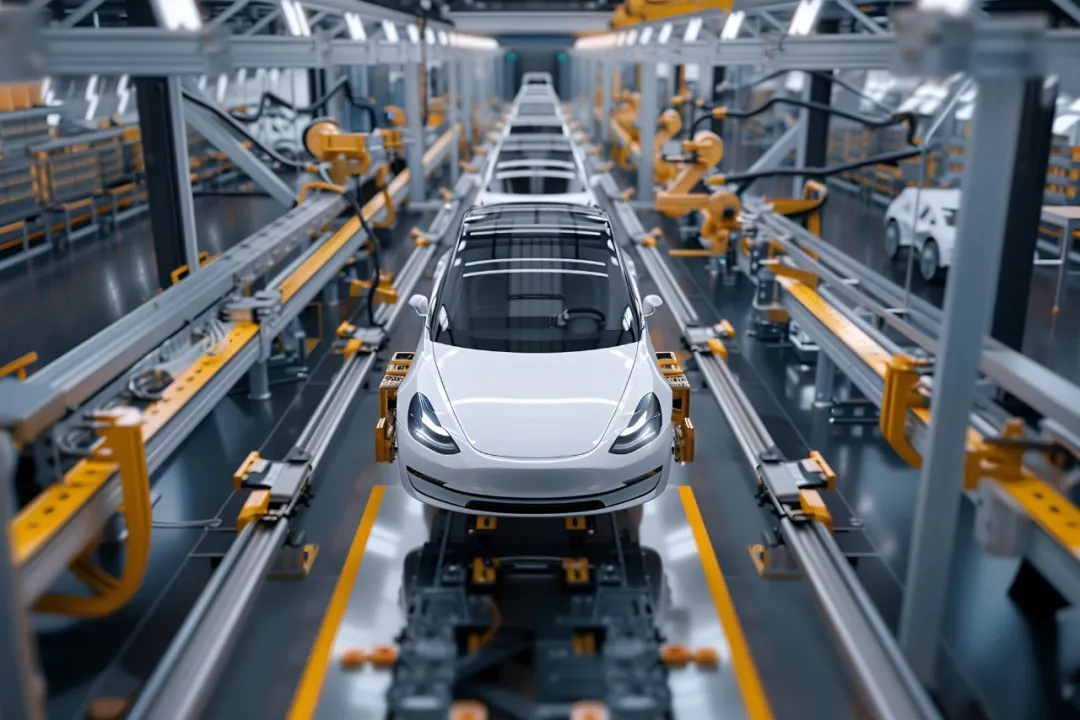
智能制造(Intelligent Manufacturing,IM)是一种由智能机器和人类专家共同组成的人机一体化智能系统,它在制造过程中能进行智能活动,诸如分析、推理、判断、构思和决策等。通过人类与智能机器之间的协作共事来拓展,延伸并部分替代人类专家制造时的脑力劳动等等。它使制造自动化在观念上不断更新,并向柔性化,智能化,高度集成化方向拓展。
智能制造起源于人工智能领域的深入研究,它通常被视为知识与智慧的综合体现,其中前者构成了智能的根基,而后者则代表了获取和应用知识解决问题的能力。
智能制造不仅涵盖了智能制造技术和智能制造系统,而且在实际应用中,智能制造系统不仅能不断地丰富其知识库,还具备自我学习的能力,以及收集和理解环境和自身信息,进而进行分析、判断和规划自己的行为模式。 数字化转型网(www.szhzxw.cn)
一、智能制造五大特征
1. 生产现场无人化,真正做到“无人”工厂
工业机器人、机械手臂等智能设备的广泛应用,使工厂无人化制造成为可能。数控加工中心、智能机器人和三坐标测量仪及其他柔性制造单元,让“无人工厂”更加触手可及。
2. 生产数据可视化,利用大数据分析进行生产决策
当下信息技术渗透到了制造业的各个环节,条形码、二维码、RFID、工业传感器、工业自动控制系统、工业物联网、ERP、CAD/CAM/CAE/CAI等技术广泛应用,数据也日益丰富,对数据的实时性要求也更高。这就要求企业顺应制造的趋势,利用大数据技术,实时纠偏,建立产品虚拟模型以模拟并优化生产流程,乃至降低生产能耗与成本。 数字化转型网(www.szhzxw.cn)
3. 生产设备网络化,实现车间“物联网”
4. 生产文档无纸化,实现高效、绿色制造
构建绿色制造体系,建设绿色工厂,实现生产洁净化、废物资源化、能源低碳化,是我国“智能制造”的重要战略之一。传统制造业中,制作过程中会有很多纸质文件产生,这不仅造成了大量浪费,而且还存在着寻找不方便,分享难和追踪耗时长等诸多问题。实现无纸化管理后,员工可以在生产现场迅速查询,浏览和下载所需的生产信息,显着减少了以纸质文档为载体的手工传递与流转,从而消除文件,数据的遗失,进一步提升生产准备效率及生产作业效率,达到绿色无纸化的目的。
5. 生产过程透明化,智能工厂的“神经”系统
推动制造过程智能化发展,通过构建智能工厂推动制造工艺仿真优化,数字化控制,状态信息实时监控与自适应控制,继而实现全过程智能管控是中国制造2025重要战略。在诸如机械、汽车、航空、船舶、轻工、家用电器以及电子信息等多个行业中,企业采用的智能工厂建设模式旨在推动生产设备(生产线)的智能化进程,旨在扩大产品价值空间并在提高生产效率与产品效能基础上获得价值增长。
二、八大模式
1. 互联工厂-打通企业运营的“信息孤岛”
2. 全生产过程能源优化管理-提高能源资源利用率
全过程能源优化管理模式在石化化工,有色和钢铁等领域得到了广泛应用,其核心是提高能源资源的利用率,并通过MES对各种设备进行收集、在构建能源管理系统(EMS)或MES时,我们考虑了各个环节的能效数据,并在其中加入了能源管理模块,以便对生产流程、设备、能源供应和工作人员进行实时的优化调整。 数字化转型网(www.szhzxw.cn)
3. 产品全生命周期可溯-提升产品质量管控能力
产品全生命周期可追溯模主要应用于食品、制药等领域,该模式以质量管控为核心,主要做法是让产品在全生命周期具有唯一标识,通过MES系统开展质量判异和过程判稳等在线质量检测和预警等。
4. 柔性制造-快速响应多样化市场需求
对多样化市场需求作出迅速反应的柔性制造模式主要用于铸造和服装,其主要作法是使生产线能同时处理多个产品/部件,车间的物流系统已经实现了自动配料功能,并成功构建了高级排产系统(APS)。此外,工控系统、制造执行系统(MES)和企业资源计划系统(ERP)之间也实现了高效的协作和集成。
5. 大规模个性化定制,满足用户个性化需求
大规模个性化定制模式主要应用于服装、纺织、家居、家电等消费品领域,通过产品模块化设计、构建产品个性化定制服务平台和个性化产品数据库等手段,实现定制服务。
6. 远程运维服务-提高装备/产品运维服务水平
互联工厂模式主要应用于石化、钢铁、电子、家电等领域,应用物联网技术构建生产数据采集系统、制造执行系统(MES)和企业资源计划系统(ERP),打通企业运营中的“信息孤岛”。
7. 网络协同制造- 供应链上下游协同优化
基于网络的协同制造模式在航空航天和汽车制造中得到了广泛的运用,这种模式着眼于供应链的优化,构建了一个跨企业的制造资源合作平台,实现了企业之间研发,管理与服务系统的整合与衔接,对制造服务与资源进行动态分析与柔性配置等功能。 数字化转型网(www.szhzxw.cn)
8. 产品生命周期数字一体化,实现缩短产品研制周期
产品全生命周期数字一体化模式主要应用于航空装备、汽车、船舶、工程机械等装备制造领域,通过(MBD)产品研发技术、全生命周期管理系统(PLM)等手段,实现缩短产品研制周期这一核心目的。
三、十大关键技术
1. 智能决策(Smart Decision Making)
企业在运营过程中,产生了大量的数据,比如与合同、回款、费用、库存、现金、产品、客户、投资、设备、产量、交货期等,这些数据通常为结构化数据,能够多维度地分析与预测。同时,利用这些数据也可提炼企业KPI并将其和预设目标相比较。 数字化转型网(www.szhzxw.cn)
2. 智能管理(Smart Management)
制造企业核心的运营管理系统包括人力资产管理系统(HCM)、客户关系管理系统(CRM)、企业资产管理系统(EAM)、能源管理系统(EMS)、供应商关系管理系统(SRM)、企业门户(EP)、业务流程管理系统(BPM)等。实现智能管理和智能决策,最重要的条件是基础数据准确和主要信息系统无缝集成。
3. 智能物流与供应链(Smart logisTIcs and SCM)
制造企业内采购,生产和销售过程中都会伴随有物料流动,所以越来越多制造企业开始关注生产自动化,物流自动化受到了越来越多的关注,其中自动化立体仓库、无人引导小车(AGV)以及智能吊挂系统都得到了广大的采纳和使用;并且在制造企业及物流企业物流中心中,智能分拣系统,堆垛机器人,自动辊道系统等得到越来越广泛地应用。WMS(Warehouse Management System,仓储管理系统)和TMS(Transport Management System,运输管理系统)也受到制造企业和物流企业的普遍关注。
4. 智能研发(Smart R&D)
研发对智造企业来讲至关重要。企业要开发智能产品,需要机电软多学科的协同配合;要缩短产品研发周期,需要深入应用仿真技术,建立虚拟数字化样机,实现多学科仿真,通过仿真减少实物试验;需要贯彻标准化、系列化、模块化的思想,以支持大批量客户定制或产品个性化定制;需要将仿真技术与试验管理结合起来,以提高仿真结果的置信度。 数字化转型网(www.szhzxw.cn)
5. 智能产线(Smart ProducTIon line)
自动化生产线是一种智能产线。许多行业中的公司都对自动化生产线有着极大的依赖性,如钢铁,化工,制药,食品饮料,烟草,芯片制造,电子组装,汽车整车及零部件制造等等。自动化生产线可分为刚性自动化生产线与柔性自动化生产线两种类型,为提高生产效率工业机器人,吊挂系统等越来越多的被运用到自动化生产线中。 数字化转型网(www.szhzxw.cn)
6. 智能车间(Smart workshop)
一个车间通常有多条生产线,要实现车间的智能化,需要对生产状况、设备状态、能源消耗、生产质量、物料消耗等信息进行实时采集和分析,进行高效排产和合理排班,显著提高设备利用率(OEE)。因此无论哪个制造行业,制造执行系统(MES)成为企业的必然选择。
7. 智能工厂(Smart Factory)
一个工厂通常由多个车间组成,大型企业有多个工厂。作为智能工厂,不仅生产过程应实现自动化、透明化、可视化、精益化,同时,产品检测、质量检验和分析、生产物流也应当与生产过程实现闭环集成。
8. 智能产品(Smart Product)
任何一个制造企业应考虑如何为产品增加智能化单元以提高其附加值。典型智能产品有智能手机,智能可穿戴设备,无人机,智能汽车,智能家电,智能售货机。 数字化转型网(www.szhzxw.cn)
9. 智能装备(Smart Equipment)
智能装备也是一种智能产品,可以补偿加工误差,提高加工精度
10. 智能服务(Smart Service)
智能服务实质上是大数据技术的一种应用:它依赖于传感器和物联网(IoT)来感知产品的当前状态,进而实施预防性的维护和修理,以便及时协助客户更换备用零件和备件,甚至还能通过对商品运行状况的了解来帮助顾客获得商机。也可收集产品运营大数据来帮助企业制定市场营销决策。

翻译:
What is intelligent manufacturing – five characteristics, eight modes, ten technologies
Intelligent Manufacturing (IM) is a human-machine integrated intelligent system composed of intelligent machines and human experts, which can carry out intelligent activities in the manufacturing process, such as analysis, reasoning, judgment, conception and decision-making. Through the collaboration between humans and intelligent machines to expand, extend and partially replace the mental labor of human experts in manufacturing and so on. It makes manufacturing automation constantly updated in concept, and expands to the direction of flexibility, intelligence, and high integration.
Intelligent manufacturing originates from in-depth research in the field of artificial intelligence, which is usually regarded as a comprehensive embodiment of knowledge and wisdom, where the former constitutes the foundation of intelligence, while the latter represents the ability to acquire and apply knowledge to solve problems.
Intelligent manufacturing not only covers intelligent manufacturing technology and intelligent manufacturing systems, but also in practical applications, intelligent manufacturing systems can not only continuously enrich their knowledge base, but also have the ability to self-learn, as well as collect and understand the environment and their own information, and then analyze, judge and plan their own behavior patterns. 数字化转型网(www.szhzxw.cn)
1. Five characteristics of intelligent manufacturing
(1) Unmanned production site, truly “unmanned” factory
The wide application of industrial robots, robotic arms and other intelligent equipment makes it possible to manufacture unmanned factories. CNC machining centers, intelligent robots and coordinate measuring machines and other flexible manufacturing units make the “unmanned factory” more accessible.
(2) Production data visualization, using big data analysis to make production decisions
At present, information technology has penetrated into all aspects of the manufacturing industry, bar code, two-dimensional code, RFID, industrial sensors, industrial automatic control system, industrial Internet of Things, ERP, CAD/CAM/CAE/CAI and other technologies are widely used, and the data is increasingly rich, and the real-time requirements for data are also higher. This requires enterprises to follow the trend of manufacturing, use big data technology, real-time correction, establish product virtual models to simulate and optimize the production process, and even reduce production energy consumption and costs. 数字化转型网(www.szhzxw.cn)
(3) Production equipment networking to achieve the “Internet of Things” in the workshop
(4) Paperless production documents to achieve efficient and green manufacturing
The construction of green manufacturing system, the construction of green factories, the realization of clean production, waste resources, energy low-carbon, is one of the important strategies of China’s “intelligent manufacturing”. In the traditional manufacturing industry, a lot of paper documents are produced in the production process, which not only causes a lot of waste, but also has many problems such as inconvenient finding, difficult sharing and long tracking time. After the realization of paperless management, employees can quickly query, browse and download the required production information at the production site, which significantly reduces the manual transmission and circulation of paper documents as the carrier, thereby eliminating the loss of documents and data, further improving the production preparation efficiency and production efficiency, and achieving the purpose of green paperless. 数字化转型网(www.szhzxw.cn)
(5) Transparent production process, “nervous” system of smart factory
Promoting the intelligent development of manufacturing process, promoting the simulation and optimization of manufacturing process through the construction of smart factories, digital control, real-time monitoring of status information and adaptive control, and then realizing the intelligent control of the whole process is an important strategy of Made in China 2025. In many industries such as machinery, automotive, aviation, shipbuilding, light industry, household appliances and electronic information, the smart factory construction model adopted by enterprises aims to promote the intelligent process of production equipment (production lines), aiming to expand the value space of products and gain value growth on the basis of improving production efficiency and product efficiency.
2. Eight models
(1) Connected factory – Open up the “information island” of enterprise operation
(2) Optimize the energy management of the whole production process – improve the utilization rate of energy resources
The whole-process energy optimization management model has been widely used in petrochemical, chemical, nonferrous and steel fields. Its core is to improve the utilization rate of energy resources, and collect various equipment through MES. When constructing the energy management system (EMS) or MES, we consider the energy efficiency data of each link, and add the energy management module to it. To optimize and adjust production processes, equipment, energy supplies and workers in real time.
(3) Traceability of product life cycle – improve product quality control ability
Product life cycle traceability model is mainly used in food, pharmaceutical and other fields, the model with quality control as the core, the main approach is to make the product have a unique identifier in the whole life cycle, and carry out online quality detection and early warning such as quality differentiation and process stability through MES system. 数字化转型网(www.szhzxw.cn)
(4) Flexible manufacturing – Fast response to diversified market needs
Flexible manufacturing models that respond quickly to diverse market demands are mainly used in casting and apparel, where the main approach is to enable the production line to handle multiple products/components at the same time, the workshop logistics system has implemented automatic batching functions, and advanced production scheduling systems (APS) have been successfully constructed. In addition, there is efficient collaboration and integration between industrial control systems, manufacturing execution systems (MES) and enterprise resource planning systems (ERP).
(5) Large-scale personalized customization to meet the individual needs of users
The large-scale personalized customization model is mainly applied to consumer goods such as clothing, textile, home furnishing, and household appliances. Through product modular design, the construction of product personalized customization service platform and personalized product database, customized services are realized. 数字化转型网(www.szhzxw.cn)
(6) Remote operation and maintenance service – Improve the level of equipment/product operation and maintenance service
The connected factory model is mainly used in petrochemical, steel, electronics, home appliances and other fields, using the Internet of Things technology to build production data acquisition system, manufacturing execution system (MES) and enterprise resource planning system (ERP), and open up the “information island” in enterprise operations.
(7) Network collaborative manufacturing – supply chain upstream and downstream collaborative optimization
Network based collaborative manufacturing mode has been widely used in aerospace and automotive manufacturing. This mode focuses on the optimization of supply chain, builds a cross-enterprise manufacturing resource cooperation platform, realizes the integration and connection of R&D, management and service systems between enterprises, and performs dynamic analysis and flexible configuration of manufacturing services and resources.
(8) Digital integration of product life cycle to shorten product development cycle
Product life cycle digital integration model is mainly used in aviation equipment, automobiles, ships, construction machinery and other equipment manufacturing fields, through (MBD) product development technology, full life cycle management system (PLM) and other means to achieve the core purpose of shortening product development cycle. 数字化转型网(www.szhzxw.cn)
3. Ten key technologies
(1) Smart Decision Making
In the process of operation, enterprises generate a large amount of data, such as contracts, payments, expenses, inventory, cash, products, customers, investment, equipment, output, delivery time, etc. These data are usually structured data, which can be analyzed and predicted in multiple dimensions. This data can also be used to refine enterprise KPIs and compare them to preset targets.
(2) Smart Management
The core operation management systems of manufacturing enterprises include human asset management system (HCM), customer Relationship management system (CRM), Enterprise Asset management system (EAM), Energy management system (EMS), supplier Relationship management system (SRM), enterprise portal (EP), business process management system (BPM), etc. To realize intelligent management and intelligent decision-making, the most important condition is the accuracy of basic data and the seamless integration of main information systems. 数字化转型网(www.szhzxw.cn)
(3) Smart logisTIcs and SCM
Manufacturing enterprises in the procurement, production and sales process will be accompanied by the flow of materials, so more and more manufacturing enterprises began to pay attention to production automation, logistics automation has been more and more attention, which automated three-dimensional warehouse, unmanned guided car (AGV) and intelligent hanging system have been widely adopted and used; And in the manufacturing enterprises and logistics enterprises logistics center, intelligent sorting system, stacking robot, automatic roller table system has been more and more widely used. WMS (Warehouse Management System, warehouse Management System) and TMS (Transport Management System, transport management system) are also widely concerned by manufacturing enterprises and logistics enterprises. 数字化转型网(www.szhzxw.cn)
(4) Smart R&D
Research and development is very important for intelligent manufacturing enterprises. To develop intelligent products, enterprises need multi-disciplinary cooperation of mechanical and electrical software. To shorten the product development cycle, it is necessary to deeply apply simulation technology, establish virtual digital prototype, realize multidisciplinary simulation, and reduce physical test through simulation. It is necessary to implement the idea of standardization, serialization and modularization to support mass customer customization or product personalized customization; It is necessary to combine simulation technology with test management to improve the confidence of simulation results.
(5) Smart ProducTIon line
Automated production line is a kind of intelligent production line. Companies in many industries rely heavily on automated production lines, such as steel, chemical, pharmaceutical, food and beverage, tobacco, chip manufacturing, electronic assembly, automotive and parts manufacturing, and so on. Automated production lines can be divided into two types of rigid automated production lines and flexible automated production lines. In order to improve production efficiency, industrial robots, hanging systems and so on are more and more used in automated production lines.
(6) Smart workshop
A workshop usually has multiple production lines, in order to achieve the intelligent workshop, it is necessary to collect and analyze the production status, equipment status, energy consumption, production quality, material consumption and other information in real time, efficient production scheduling and reasonable scheduling, and significantly improve the equipment utilization rate (OEE). Therefore, no matter which manufacturing industry, manufacturing execution system (MES) has become an inevitable choice for enterprises.
(7) Smart Factory
A factory usually consists of multiple workshops, and large enterprises have multiple factories. As a smart factory, not only the production process should be automated, transparent, visual, lean, at the same time, product testing, quality inspection and analysis, production logistics should also be closed loop integration with the production process. 数字化转型网(www.szhzxw.cn)
(8) Smart Product
Any manufacturing company should consider how to add intelligent units to products to increase their added value. Typical smart products are smart phones, smart wearable devices, drones, smart cars, smart home appliances, smart vending machines.
(9) Smart Equipment
Intelligent equipment is also an intelligent product that can compensate for processing errors and improve processing accuracy 数字化转型网(www.szhzxw.cn)
(10) Smart Service
Smart services is essentially an application of big data technology: it relies on sensors and the Internet of Things (IoT) to sense the current state of the product, to perform preventive maintenance and repair, to assist customers in timely replacement of spare parts and spares, and even to help customers gain business opportunities through knowledge of the health of the product. Big data on product operations can also be collected to help companies make marketing decisions.
本文由数字化转型网(www.szhzxw.cn)转载而成,来源于智造制造圈;编辑/翻译:数字化转型网宁檬树。
免责声明: 本网站(https://www.szhzxw.cn/)内容主要来自原创、合作媒体供稿和第三方投稿,凡在本网站出现的信息,均仅供参考。本网站将尽力确保所提供信息的准确性及可靠性,但不保证有关资料的准确性及可靠性,读者在使用前请进一步核实,并对任何自主决定的行为负责。本网站对有关资料所引致的错误、不确或遗漏,概不负任何法律责任。
本网站刊载的所有内容(包括但不仅限文字、图片、LOGO、音频、视频、软件、程序等) 版权归原作者所有。任何单位或个人认为本网站中的内容可能涉嫌侵犯其知识产权或存在不实内容时,请及时通知本站,予以删除。